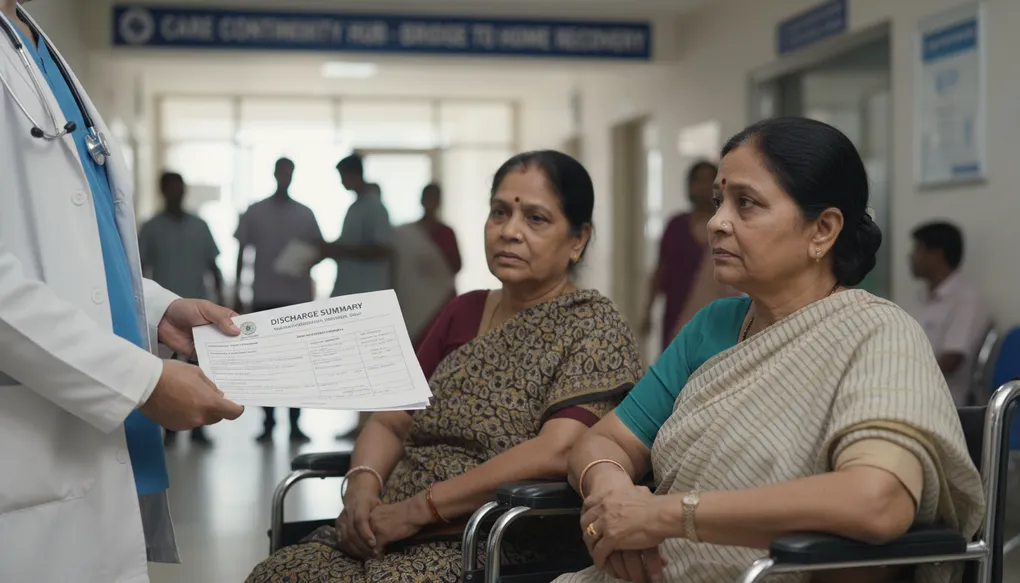
Discharge Summaries and Referrals
Create thorough discharge summaries and professional referral letters quickly—ensure continuity of care with complete, clear documentation.
The patient is ready to go home. Family is waiting. But you’re stuck at the computer, typing the same discharge summary format you’ve typed a thousand times before. Meanwhile, three more patients need discharge paperwork, a specialist is waiting for your referral letter, and the GP who sent you this patient expects a counter-referral with your findings.
Sound familiar?
Discharge documentation and referral letters are essential for continuity of care—but they shouldn’t consume hours of your day. This article shows you how to use AI to draft these critical documents quickly while maintaining the accuracy and completeness your patients deserve.
What Problem This Solves
The Documentation Burden
Discharge summaries and referral letters are among the most time-consuming documentation tasks:
- A detailed discharge summary takes 20-40 minutes to write properly
- Referral letters require organizing complex patient histories
- Counter-referrals need clear summaries of your findings and recommendations
- Transfer summaries must be comprehensive enough for safe handover
- Day-care procedure notes have specific requirements
The Consequences of Rushed Documentation
When time pressure leads to incomplete documentation:
- Critical information gets missed
- Follow-up care suffers
- Readmission rates increase
- Medico-legal risks multiply
- Referring doctors lose trust in your referrals
What AI Assistance Offers
- First drafts in 2-3 minutes instead of 20-30
- Consistent structure that doesn’t miss essential elements
- Templates adapted to Indian medical documentation standards
- Patient-friendly versions for those who want to understand their care
- More time for the clinical reasoning that only you can provide
Important: AI creates drafts. You verify every fact, medication, and dosage. Your signature means you’ve reviewed and approved the content.
How to Do It (Steps)
Step 1: Gather Your Clinical Information First
Before prompting AI, have ready:
- Patient demographics and admission details
- Primary diagnosis and secondary diagnoses
- Procedures performed with dates
- Current medications with doses and frequencies
- Investigation results (relevant ones)
- Clinical course highlights
- Follow-up plan
Pro tip: Keep a simple notepad or phone note during rounds. Jot key points as you go. This makes discharge documentation 10x faster.
Step 2: Choose the Right Document Type
Know what you need:
- Hospital Discharge Summary: Complete inpatient stay documentation
- Day-Care Procedure Summary: Shorter format for same-day procedures
- Referral Letter: Sending patient to a specialist
- Counter-Referral Letter: Reporting back to the referring doctor
- Transfer Summary: Handing over to another facility
Step 3: Use the Appropriate Template
Each document type has essential elements. AI helps ensure nothing is missed.
Step 4: Review for Accuracy
This is non-negotiable. Check:
- All medications (names, doses, frequencies)
- Dates and timelines
- Procedure details
- Follow-up instructions
- Warning signs listed
- Contact information
Step 5: Medication Reconciliation
Before finalizing any discharge document:
- Compare discharge medications with admission medications
- Verify no drug interactions
- Ensure doses are appropriate for patient’s renal/hepatic function
- Confirm patient/family understands changes
Example Prompts
Example 1: Comprehensive Discharge Summary
Role: Act as a medical documentation specialist familiar with Indian hospital discharge summary standards.

Context:
- Patient: 58-year-old male, retired government officer
- MRD: [HOSPITAL MRD NUMBER]
- Admission: [DATE] | Discharge: [DATE]
- Primary diagnosis: Acute inferior wall MI
- Secondary: Type 2 DM, Hypertension (both controlled)
- Procedure: Primary PCI to RCA with drug-eluting stent on [DATE]
- Complications: None, uncomplicated recovery
- Discharge condition: Stable, ambulatory, tolerating diet

Medications at discharge:
- Tab Aspirin 75mg OD
- Tab Ticagrelor 90mg BD
- Tab Atorvastatin 80mg HS
- Tab Metoprolol 25mg BD
- Tab Ramipril 2.5mg OD
- Tab Metformin 500mg BD
- Tab Pantoprazole 40mg OD

Task: Draft a complete discharge summary including all standard sections.

Format: Standard Indian hospital discharge summary with sections for: Patient Details, Admission Details, Diagnosis, History of Present Illness, Past History, Clinical Examination, Investigations, Hospital Course, Procedure Details, Condition at Discharge, Medications, Follow-up, Lifestyle Advice, Warning Signs.

Constraints:
- Professional medical language
- Include specific follow-up timeline (1 week, 1 month, 3 months)
- Add cardiac rehabilitation advice appropriate for Indian lifestyle
- Include detailed warning signs for post-MI patients
- Leave [BLANKS] for details I need to verify
- Do not add medications I haven't mentioned
Example 2: Day-Care Procedure Summary
Role: You are a medical documentation assistant at a multi-specialty hospital in India.

Context:
- Patient: 35-year-old female, IT professional
- Procedure: Diagnostic hysteroscopy + endometrial biopsy
- Indication: Irregular menstrual bleeding, thickened endometrium on ultrasound
- Anesthesia: Short GA
- Duration: 20 minutes
- Findings: Normal uterine cavity, no polyps/fibroids, biopsy taken
- Complications: None
- Post-procedure: Tolerated well, passed urine, no bleeding

Task: Create a day-care procedure discharge summary.

Format: Concise single-page format with: Patient Details, Procedure Details, Indication, Findings, Post-Procedure Status, Medications, Instructions, Follow-up, When to Seek Help.

Constraints:
- Keep concise—suitable for day-care format
- Include specific post-procedure care instructions
- Diet and activity advice for next 48-72 hours
- Clear mention of when biopsy results will be available
- Warning signs specific to this procedure
Example 3: Specialist Referral Letter
Role: Act as a general physician writing a referral to a gastroenterologist.

Context:
Patient: 48-year-old male bank manager
Presenting complaint: Dyspepsia and early satiety for 3 months
Relevant history:
- Lost 4 kg weight unintentionally
- No hematemesis or melena
- Smoker 10 pack-years, quit 2 years ago
- Father had gastric cancer at age 65
- H. pylori positive on stool antigen test

Investigations done:
- CBC: Hb 11.2, others normal
- LFT/KFT: Normal
- Ultrasound abdomen: Normal
- H. pylori stool antigen: Positive

Current medications: Tab Pantoprazole 40mg BD for 2 weeks (partial relief)

My concern: Given weight loss, family history, and partial response to PPI, want to rule out upper GI malignancy.

Task: Write a professional referral letter requesting urgent upper GI endoscopy and evaluation.

Format: Standard medical referral letter format with: Recipient details placeholder, Patient details, Reason for referral, Clinical summary, Investigations, Current treatment, Specific request, Urgency level, My contact details placeholder.

Constraints:
- Professional but collegial tone
- Clearly convey the urgency and concern
- Be concise—specialists are busy
- Include all relevant positives and negatives
- One page maximum
Example 4: Counter-Referral to GP
Role: You are a cardiologist writing back to the referring family physician.

Context:
Referred patient: 62-year-old female with palpitations
Referred by: Dr. [GP NAME], Family Physician, [CLINIC]
My findings:
- ECG: Atrial fibrillation with controlled ventricular rate
- Echo: Normal LV function, mild LA dilatation, no structural abnormality
- Thyroid: TSH normal
- Diagnosis: Non-valvular atrial fibrillation, likely hypertensive heart disease
- CHA2DS2-VASc score: 3 (Female, HTN, Age 62)

Management initiated:
- Rate control: Tab Metoprolol 25mg BD
- Anticoagulation: Tab Apixaban 5mg BD (after discussing stroke vs bleeding risk)
- Continued her antihypertensives

Task: Write a counter-referral letter to the GP with findings and shared care plan.

Format: Professional letter format with: Summary of evaluation, Diagnosis, Management initiated, Shared care plan, What to monitor, When to re-refer, Red flags.

Constraints:
- Appreciative, collegial tone (thank for appropriate referral)
- Clear about shared responsibilities
- Specify what the GP should monitor (INR not needed for Apixaban, but renal function annually)
- List specific indications for re-referral
- Keep to one page
Example 5: Patient-Friendly Discharge Summary
Role: You are a patient educator creating a simplified version of a discharge summary for the patient and family.

Context:
Original discharge diagnosis: Community-acquired pneumonia (resolved)
Patient: 70-year-old grandmother, Hindi-speaking, studied till 8th standard
Hospital stay: 5 days
Discharge medications:
- Tab Augmentin 625mg thrice daily for 5 more days
- Tab Paracetamol 500mg if fever
- Syrup Ambrolol for cough

The family needs to understand: What happened, current medicines, diet, activity, warning signs, follow-up.

Task: Create a patient-friendly summary they can understand and follow.

Format: Simple sections with headings in Hindi-English mix: "Aapko kya hua tha" (What happened), "Ghar jaake kya karna hai" (What to do at home), "Dawaiyan" (Medicines), "Kya khana hai" (Diet), "Kab doctor ke paas aana hai" (When to come back), "Emergency mein kya karna hai" (What to do in emergency).

Constraints:
- Very simple language (8th standard level)
- Hindi-English mix as spoken in North India
- Use familiar terms (like "dawai" not "medication")
- Include specific times for medicines (with meals, bedtime, etc.)
- Reassuring tone—patient was worried about hospitalization
- Under 300 words
Bad Prompt → Improved Prompt
Bad Prompt:
Write a discharge summary for a heart patient.Problems:
- No patient details
- No specific diagnosis
- No medications
- No clinical course
- No format specified
- “Heart patient” could mean a hundred things
Improved Prompt:
Role: Act as a senior medical officer drafting discharge documentation for a tertiary care hospital in India.

Context:
Patient: [58-YEAR-OLD MALE], [RETIRED TEACHER], MRD [NUMBER]
Admission: [DATE] via emergency with acute chest pain
Diagnosis: Acute anterior wall STEMI
Procedure: Thrombolysis with Tenecteplase (successful reperfusion)
Hospital course:
- Initial TIMI flow 0, post-lysis TIMI 3
- Peak Troponin I: 15.6 ng/ml
- Echo: Mild LV dysfunction (EF 45%), anterior wall hypokinesia
- Developed PVCs on day 2, resolved with correction of K+ and Mg++
- No heart failure symptoms
- Mobilized gradually, discharged on day 6

Discharge medications:
- Tab Aspirin 75mg OD
- Tab Clopidogrel 75mg OD
- Tab Atorvastatin 40mg HS
- Tab Metoprolol 25mg BD
- Tab Ramipril 2.5mg OD
- Tab Pantoprazole 40mg OD

Comorbidities: Newly detected Type 2 DM (FBS 156), known hypertension

Task: Draft a comprehensive discharge summary.

Format: Standard hospital format with all sections: Header, Patient details, Admission details, Diagnosis (primary + secondary), HPI, Past history, Examination at admission, Investigations table, Hospital course, Procedure details, Condition at discharge, Medications with doses and duration, Follow-up schedule, Lifestyle modifications, Warning signs, Emergency contact.

Constraints:
- Use professional medical terminology
- Include specific cardiac rehabilitation advice
- Post-STEMI precautions appropriate for Indian lifestyle
- Clear 1-week, 1-month, 3-month follow-up plan
- Mention need for staged angiography
- Include HbA1c and fasting lipid profile in follow-up investigations
- Leave [PLACEHOLDERS] for verification
Common Mistakes
| Mistake | Why It’s Dangerous | How to Fix |
|---|---|---|
| Not verifying medications | Wrong dose or drug can harm patient | Check every medication against your notes |
| Skipping medication reconciliation | Patient may take old and new medicines together | Compare admission vs discharge meds explicitly |
| Generic follow-up advice | Patient doesn’t know when to return | Specific dates: “Return on [DATE]” or “in 7 days on [DATE]“ |
| Missing warning signs | Patient doesn’t recognize deterioration | List condition-specific red flags they can identify |
| Too much jargon in patient-facing docs | Patient doesn’t understand, won’t comply | Create two versions: professional + patient-friendly |
| Forgetting to mention stopped medications | Patient continues them anyway | Explicitly list: “STOPPED: Tab [X] - no longer needed” |
| Incomplete referral context | Specialist misses important information | Include relevant negatives, not just positives |
| No urgency indicator in referrals | Urgent cases wait in routine queue | Clearly mark: URGENT/SOON/ROUTINE |
Clinic-Ready Templates
Template 1: Hospital Discharge Summary
Role: Act as a medical documentation specialist at a [HOSPITAL TYPE] hospital in [CITY], India.

Context:
PATIENT DETAILS:
- Name: [NAME]
- Age/Gender: [AGE]/[GENDER]
- MRD Number: [MRD]
- Admission Date: [DATE] | Discharge Date: [DATE]
- Ward: [WARD NAME/NUMBER]
- Consultant: Dr. [NAME], [SPECIALTY]

CLINICAL DETAILS:
- Primary Diagnosis: [DIAGNOSIS]
- Secondary Diagnoses: [LIST]
- Procedures: [LIST WITH DATES]
- Complications (if any): [DESCRIBE OR "None"]

MEDICATIONS AT DISCHARGE:
[LIST ALL WITH DOSE, FREQUENCY, DURATION]

INVESTIGATION HIGHLIGHTS:
[KEY RESULTS]

Task: Create a complete discharge summary following standard Indian hospital format.

Format:
1. Hospital header placeholder
2. Patient identification section
3. Admission and discharge details
4. Diagnosis section (primary, secondary, procedure codes if applicable)
5. History of presenting illness
6. Past medical/surgical history
7. Clinical examination findings
8. Investigations (table format)
9. Hospital course
10. Procedure details (if applicable)
11. Condition at discharge
12. Discharge medications (table: Drug | Dose | Frequency | Duration | Special instructions)
13. Follow-up plan with specific dates
14. Lifestyle advice
15. Warning signs
16. Emergency contact
17. Signature blocks

Constraints:
- Professional medical language
- Medication table must include purpose of each drug in simple terms
- Follow-up section must have specific dates, not just "after 1 week"
- Warning signs must be patient-identifiable (symptoms, not lab values)
- Leave [PLACEHOLDERS] for information requiring verification
Template 2: Day-Care/Short-Stay Procedure Summary
Role: You are a medical documentation assistant for a day-care surgery center.

Context:
PATIENT: [AGE]/[GENDER], [OCCUPATION]
PROCEDURE: [PROCEDURE NAME]
DATE: [DATE]
ANESTHESIA: [TYPE]
SURGEON: Dr. [NAME]
INDICATION: [REASON FOR PROCEDURE]
FINDINGS: [DESCRIBE]
SPECIMEN SENT: [YES/NO, IF YES - WHAT]
DURATION: [TIME]
ESTIMATED BLOOD LOSS: [AMOUNT]
COMPLICATIONS: [DESCRIBE OR "None"]
POST-PROCEDURE STATUS: [STABLE/OBSERVATIONS]

Task: Create a concise day-care procedure discharge summary.

Format: Single-page format with:
- Patient details header
- Procedure details box
- Findings summary
- Post-procedure status
- Discharge medications (if any)
- Care instructions (wound care, activity, diet)
- Follow-up appointment
- When to seek immediate help
- Contact numbers

Constraints:
- Concise—patient should be able to read in 2 minutes
- Clear wound care instructions if applicable
- Activity restrictions with specific timelines
- Diet progression if relevant
- When results will be available (if specimens sent)
- Emergency contact numbers
Template 3: Specialist Referral Letter
Role: Act as a [YOUR SPECIALTY] physician writing a referral letter to a [SPECIALIST TYPE].

Context:
TO: Dr. [SPECIALIST NAME], [DEPARTMENT], [HOSPITAL] (or "The Consultant [SPECIALTY]")
PATIENT: [NAME], [AGE]/[GENDER], [OCCUPATION]
REFERRAL DATE: [DATE]
URGENCY: [ROUTINE/SOON (within 1-2 weeks)/URGENT (within 48 hours)/EMERGENCY]

REASON FOR REFERRAL:
[BRIEF STATEMENT OF WHY YOU'RE REFERRING]

CLINICAL SUMMARY:
- Presenting complaint: [DESCRIPTION WITH DURATION]
- Relevant history: [KEY POINTS]
- Examination findings: [RELEVANT POSITIVES AND NEGATIVES]
- Investigations done: [LIST WITH RESULTS]
- Treatment given: [WHAT YOU'VE TRIED]
- Response: [HOW PATIENT RESPONDED]

MY CLINICAL CONCERN:
[WHAT YOU'RE WORRIED ABOUT OR WANT RULED OUT]

SPECIFIC REQUEST:
[WHAT YOU WANT THE SPECIALIST TO DO]

Task: Write a professional referral letter.

Format:
- Formal letter format
- "Dear Dr. [Name]" or "Dear Colleague"
- Structured paragraphs: Introduction, Clinical summary, Investigations, Current management, Reason for referral, Specific request
- Closing with your details

Constraints:
- Collegial, professional tone
- One page maximum
- Be specific about what you want (opinion only? co-management? take over care?)
- Include relevant negatives (helps specialist)
- Clearly state urgency
- Include your contact for discussion
- Attach investigation reports when sending
Template 4: Counter-Referral Letter
Role: Act as a [YOUR SPECIALTY] consultant writing back to the referring physician.

Context:
REFERRED BY: Dr. [NAME], [SPECIALTY/GP], [CLINIC/HOSPITAL]
PATIENT: [NAME], [AGE]/[GENDER]
REFERRAL REASON: [WHY THEY SENT THE PATIENT]
DATE OF CONSULTATION: [DATE]

MY FINDINGS:
- History: [KEY POINTS]
- Examination: [RELEVANT FINDINGS]
- Investigations done by me: [LIST WITH RESULTS]
- Diagnosis: [YOUR DIAGNOSIS]

MANAGEMENT:
- Medications started: [LIST WITH DOSES]
- Procedures done: [IF ANY]
- Advice given: [KEY POINTS]

Task: Write a counter-referral letter updating the referring doctor.

Format:
- Thank for referral (opening)
- Summary of my evaluation
- Diagnosis reached
- Management initiated
- Shared care plan (what they should monitor, what I'll handle)
- Follow-up with me: when and why
- Indications for re-referral (red flags)
- Offer for discussion
- Closing

Constraints:
- Appreciative, collegial tone
- Clear delineation of shared responsibilities
- Specific parameters for them to monitor
- Specific triggers for re-referral
- One page
- Include your direct contact for queries
Template 5: Transfer Summary
Role: Act as a physician preparing transfer documentation for a patient being moved to another facility.

Context:
TRANSFERRING FROM: [YOUR HOSPITAL], [CITY]
TRANSFERRING TO: [RECEIVING HOSPITAL], [CITY]
REASON FOR TRANSFER: [WHY - higher care/closer to home/specialty not available/patient request]

PATIENT: [NAME], [AGE]/[GENDER]
DATE OF ADMISSION: [DATE]
DATE OF TRANSFER: [DATE]

CLINICAL STATUS AT TRANSFER:
- Consciousness: [GCS IF RELEVANT]
- Vitals: [BP/PR/RR/SpO2/TEMP]
- Airway: [PATENT/INTUBATED/TRACHEOSTOMY]
- Breathing: [SPONTANEOUS/ON O2/ON VENTILATOR - SETTINGS]
- Circulation: [STABLE/ON PRESSORS - WHICH AND DOSE]
- Lines: [IV/CENTRAL/ARTERIAL/CATHETER/RYLES]

DIAGNOSIS: [CURRENT WORKING DIAGNOSIS]

SUMMARY OF CARE:
[BRIEF SUMMARY OF WHAT WAS DONE]

PENDING ISSUES:
[WHAT STILL NEEDS TO BE ADDRESSED]

CURRENT MEDICATIONS:
[COMPLETE LIST WITH DOSES, LAST GIVEN TIME]

INVESTIGATION RESULTS:
[KEY RECENT RESULTS]

Task: Create a comprehensive transfer summary.

Format:
- Clear header identifying this as TRANSFER SUMMARY
- Demographic details
- Reason for transfer
- Clinical status section (vitals, lines, support)
- Diagnosis
- Summary of hospital course
- Procedures done
- Current medications (table with last dose time)
- Pending issues/plan
- Attached documents checklist
- Transferring doctor details
- Emergency contact during transfer

Constraints:
- Must be comprehensive—receiving team starts from zero
- Medication times are critical
- Current ventilator settings if applicable
- Blood products given in last 24 hours
- Last feed time if relevant
- Allergy alerts prominently displayed
- Contact number for queries during transfer
- Checklist of documents/images being sent
Safety Note
Discharge documentation carries significant clinical and legal weight. These safety principles are non-negotiable:
Critical Verification Points
-
Medications: Verify EVERY medication, dose, and frequency. AI may:
- Suggest incorrect doses
- Miss drug interactions
- List medications you didn’t prescribe
- Forget to account for renal/hepatic dosing
-
Dates and Timelines: Confirm all dates mentioned. Errors in procedure dates or follow-up schedules can have serious consequences.
-
Diagnosis Accuracy: Ensure the diagnosis documented matches your clinical assessment. This becomes the official record.
-
Allergy Documentation: Always verify allergies are correctly and prominently documented.
-
Patient-Specific Instructions: Generic advice may not suit your specific patient. Customize for their condition, comorbidities, and home situation.
Medication Reconciliation Checklist
Before finalizing any discharge:
- Compare admission medication list with discharge list
- Identify and explain any stopped medications
- Verify doses are appropriate for current renal/hepatic function
- Check for drug-drug interactions in the discharge combination
- Ensure patient/family understands what changed and why
- Confirm no duplicate medications (brand vs generic confusion)
Documentation Standards
Your discharge summary is a legal document. Ensure:
- Accurate representation of the clinical course
- No information you cannot verify
- Clear documentation of informed consent for procedures
- Appropriate follow-up plan documented
- Warning signs the patient can recognize and act upon
Remember: “The AI generated it” is not a medicolegal defense. Your signature means you’ve verified the content.
Copy-Paste Prompts
Prompt 1: Quick Discharge Summary
Role: Medical documentation assistant for Indian hospital.

Context:
Patient: [AGE]/[GENDER], MRD: [NUMBER]
Admission: [DATE], Discharge: [DATE]
Diagnosis: [PRIMARY DIAGNOSIS]
Procedure (if any): [PROCEDURE]
Complications: [YES/NO - DESCRIBE IF YES]

Discharge medications:
[LIST ALL: Drug name, dose, frequency, duration]

Key investigation results:
[LIST RELEVANT RESULTS]

Task: Draft complete discharge summary with all standard sections.

Format: Standard Indian hospital discharge format with: Patient details, Dates, Diagnosis, HPI, Examination, Investigations (table), Hospital course, Medications (table), Follow-up, Advice, Warning signs.

Constraints:
- Professional language
- Specific follow-up dates
- Patient-identifiable warning signs
- Leave [BLANKS] for verification
- Do not add medications not listed
Prompt 2: Referral Letter Generator
Role: [YOUR SPECIALTY] physician in India.

Context:
Referring to: [SPECIALIST TYPE]
Patient: [AGE]/[GENDER]
Problem: [PRESENTING COMPLAINT, DURATION]
Key findings: [EXAMINATION/INVESTIGATION RESULTS]
What I've tried: [TREATMENT GIVEN]
My concern: [WHAT YOU WANT RULED OUT OR MANAGED]
Urgency: [ROUTINE/URGENT]

Task: Write a professional referral letter.

Format: Formal medical letter, one page, structured paragraphs.

Constraints:
- Collegial tone
- Include relevant negatives
- Specific request stated clearly
- My contact details placeholder at end
Prompt 3: Counter-Referral Letter
Role: [YOUR SPECIALTY] consultant responding to referring doctor.

Context:
Referred by: Dr. [NAME], [SPECIALTY]
Patient: [AGE]/[GENDER]
Referred for: [REASON]
My findings: [SUMMARY]
My diagnosis: [DIAGNOSIS]
Treatment started: [MEDICATIONS/PROCEDURES]
Shared care plan: [WHAT THEY SHOULD MONITOR, WHAT I'LL HANDLE]

Task: Write a counter-referral letter.

Format: Professional letter thanking for referral, summarizing findings, outlining shared care plan.

Constraints:
- Appreciative, collegial tone
- Clear responsibilities
- Specific re-referral triggers
- One page
Prompt 4: Patient-Friendly Discharge Explanation
Role: Patient educator creating simplified discharge information.

Context:
Patient: [AGE]-year-old, [LANGUAGE PREFERENCE], [EDUCATION LEVEL] education
What happened: [DIAGNOSIS IN SIMPLE TERMS]
Treatment: [WHAT WAS DONE]
Going home with: [DISCHARGE MEDICATIONS - SIMPLE NAMES]
Follow-up: [WHEN]

Task: Create a simple version of discharge instructions the patient and family can understand.

Format: Short sections with simple headings:
- What happened to you
- Your medicines (when to take each)
- What to eat and not eat
- What activities are okay
- Warning signs (when to come back immediately)
- Your next appointment

Constraints:
- Very simple [LANGUAGE] suitable for [EDUCATION LEVEL]
- Use familiar terms
- Include times for medicines (morning, with food, bedtime)
- Reassuring tone
- Under 250 words
Prompt 5: Transfer Summary
Role: Physician preparing transfer documentation.

Context:
Patient: [AGE]/[GENDER]
Transfer to: [HOSPITAL NAME] for [REASON]
Current status:
- Vitals: [BP/PR/RR/SPO2]
- Consciousness: [ALERT/DROWSY/SEDATED/GCS]
- Support: [ROOM AIR/O2/VENTILATOR - SETTINGS IF APPLICABLE]
- Lines: [IV ACCESS, CATHETERS, ETC.]

Diagnosis: [CURRENT DIAGNOSIS]
Treatment given: [SUMMARY]
Current medications: [LIST WITH DOSES AND LAST GIVEN TIME]
Pending issues: [WHAT RECEIVING TEAM NEEDS TO ADDRESS]

Task: Create comprehensive transfer summary.

Format: Clear sections for: Patient ID, Transfer reason, Current clinical status, Diagnosis, Summary of care, Current medications with timing, Pending issues, Attached documents, Contact numbers.

Constraints:
- Must be complete—receiving team depends on this
- Medication times are critical
- Allergy alerts prominent
- Current support/ventilator settings exact
- Contact number for queries
Do’s and Don’ts
Do’s
- Do verify every medication, dose, and frequency before signing
- Do perform medication reconciliation comparing admission and discharge lists
- Do include specific dates for follow-up appointments
- Do list warning signs patients can recognize (symptoms, not lab values)
- Do create both professional and patient-friendly versions for complex cases
- Do clearly document stopped medications with reasons
- Do include your contact details in referral letters
- Do state urgency level clearly in referrals
- Do thank referring doctors in counter-referrals (maintains professional relationships)
- Do attach relevant investigation reports with referrals
- Do keep a saved template library for common discharge types in your practice
Don’ts
- Don’t accept AI-generated medication lists without verification
- Don’t use AI output as final without clinical review
- Don’t include patient identifying information (real names, Aadhaar) in AI prompts
- Don’t forget to mention medications that were stopped
- Don’t write vague follow-up plans (“come if needed”)
- Don’t skip warning signs—they prevent readmissions
- Don’t send referrals without indicating urgency
- Don’t assume the receiving doctor has any prior information
- Don’t forget medication timing in transfer summaries
- Don’t sign documents you haven’t thoroughly reviewed
- Don’t rely on AI for drug interaction checking—use proper pharmacy resources
1-Minute Takeaway
The Documentation Challenge Discharge summaries and referral letters are essential but time-consuming. Incomplete documentation leads to care gaps, readmissions, and medicolegal risk.
The AI Solution Use structured prompts to generate first drafts quickly. AI handles the format and organization; you focus on clinical accuracy.
Five Document Types, Five Templates
- Hospital Discharge Summary: Complete inpatient documentation
- Day-Care Summary: Concise same-day procedure notes
- Referral Letter: Clear communication to specialists
- Counter-Referral: Professional update to referring doctors
- Transfer Summary: Safe handover to receiving facility
The Non-Negotiable Rule AI drafts, you verify. Every medication, every dose, every date must be checked. Your signature means you’ve reviewed and approved the content.
Medication Reconciliation Always compare admission and discharge medications. Explicitly document what was stopped and why. This single step prevents countless medication errors.
The Quick Formula For any discharge document:
- Gather clinical data first
- Choose the right template
- Generate AI draft
- Verify medications (most critical step)
- Check dates and follow-up
- Review warning signs
- Sign only when satisfied
Start Today Pick one template from this article. Use it for your next discharge summary. Refine based on your needs. Build your personal library of verified prompts.
This article builds on concepts from The 5-Part Prompt Formula (B1) and Clinical Documentation and SOAP Notes (C2). For patient education materials that complement discharge summaries, see our articles on patient communication.