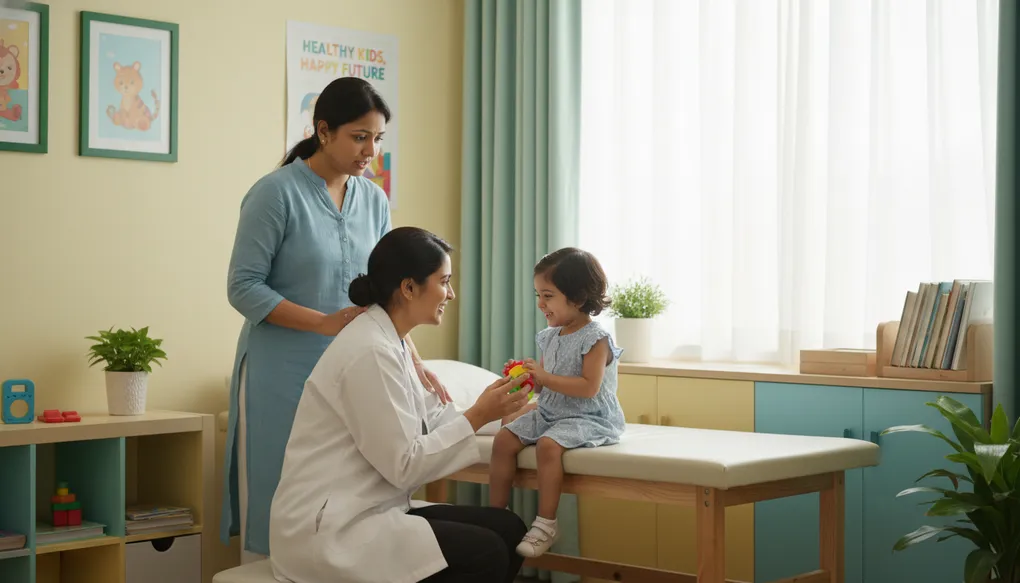
Pediatrics Prompt Pack
Ready-to-use prompts for pediatricians—parent counselling, vaccination education, growth monitoring guidance, and child-friendly health communication.
“Doctor, my mother-in-law says we should not give the vaccine because the baby had a slight cold last week. What should we do?”
“Is this fever dangerous? Should we rush to the hospital?”
“My neighbour’s child started walking at 10 months. My baby is 14 months and still not walking properly. Is something wrong?”
Welcome to pediatric practice—where you treat the child but counsel the entire family. In Indian joint families, you are often educating parents, grandparents, and sometimes helpful aunties, all with different beliefs and concerns.
This Pediatrics Prompt Pack builds on the patient instruction fundamentals from D2 and the patient education principles from F1. Here, we focus specifically on prompts that help you communicate effectively with parents, address family dynamics, and create age-appropriate guidance for children from newborns to adolescents.
What Problem This Solves
Pediatric communication has unique challenges:
Parent Anxiety
- First-time parents who panic at every sneeze
- WhatsApp-group-educated parents with misinformation
- Anxious parents comparing their child to every other child
- Working parents feeling guilty about not being present
Family Dynamics
- Grandparents with outdated advice (“ghee in the first week”, “no eggs till age 2”)
- Conflicting opinions between parents and in-laws
- Need to educate multiple family members, not just parents
Age-Specific Communication
- Newborn care instructions are different from toddler guidance
- Adolescent health needs sensitive, private communication
- Growth milestones vary—parents need reassurance, not alarm
Common Pediatric Concerns
- Vaccination hesitancy and schedule confusion
- Fever phobia (parents treating the thermometer, not the child)
- Antibiotic demands for viral infections
- Feeding battles and nutrition anxiety
- Developmental milestone comparisons
The Reality You explain the same vaccination schedule 20 times a day. You counsel parents about viral fevers not needing antibiotics every hour. You reassure grandmothers that formula is not poison if breastfeeding is supplemented.
AI-assisted prompts can help you create consistent, family-friendly, culturally sensitive materials that address these challenges—freeing you to focus on clinical care while ensuring every family gets complete, accurate information.
How to Do It (Steps)
Step 1: Identify Who Needs the Information
In pediatrics, the “patient” rarely reads the instructions. Ask yourself:
- Primary caregiver: Mother, father, or grandparent?
- Education level: Graduate parent vs. limited-literacy grandparent
- Language comfort: English, Hindi, regional language, or mix?
- Family structure: Nuclear family or joint family?
Step 2: Choose Age-Appropriate Content
Different ages need different focus areas:
| Age Group | Primary Concerns | Communication Focus |
|---|---|---|
| Newborn (0-28 days) | Feeding, jaundice, umbilical care | Simple, reassuring, warning-sign focused |
| Infant (1-12 months) | Vaccination, milestones, weaning | Schedule-based, milestone ranges not deadlines |
| Toddler (1-3 years) | Feeding battles, tantrums, safety | Practical tips, normalize variations |
| Preschool (3-6 years) | School readiness, common illnesses | Age-appropriate explanations for child too |
| School-age (6-12 years) | Academics, hygiene, nutrition | Include child in counselling |
| Adolescent (12-18 years) | Puberty, mental health, lifestyle | Private communication, respect autonomy |
Step 3: Address Common Myths Proactively
Indian pediatric practice means addressing:
- Vaccine myths (fever after vaccine means it “did not suit”)
- Feeding myths (no banana during cold, no curd at night)
- Traditional remedies that may be harmful
- Over-reliance on antibiotics
Include “Myth vs Fact” sections in your prompts.
Step 4: Create Multi-Generational Materials
When grandparents are primary caregivers:
- Simpler language, larger text
- Acknowledge traditional practices respectfully
- Bridge old and new advice gently
- Avoid making them feel criticized
Step 5: Include Clear Emergency Guidance
Parents often cannot distinguish between “wait and watch” and “rush to hospital.” Every instruction should have:
- What is normal (reassurance)
- What needs a phone call or clinic visit
- What needs immediate hospital attention
Step 6: Verify Age-Specific Details
Critical: Always verify:
- Age-appropriate advice (feeding, activities, medicines)
- Vaccination schedules match current IAP recommendations
- Developmental milestones are given as ranges, not fixed deadlines
- Any dosing references are removed (doctor will prescribe)
Example Prompts (2-5)
Example 1: Vaccination Schedule Explanation for New Parents
Act as a friendly pediatrician in an Indian urban clinic explaining vaccinations to first-time parents.

The parents are educated professionals but anxious about "too many vaccines too soon." They have been reading WhatsApp forwards about vaccine dangers.

Create a vaccination explanation covering:
1. Why vaccines are given early (immune system ready, disease risk high)
2. Brief explanation of the IAP 2024 schedule from birth to 18 months
3. Common side effects vs. concerning signs
4. Addressing the "too many vaccines" concern
5. What to do on vaccination day (feeding, paracetamol guidance)

Format:
- Opening reassurance paragraph
- Simple table showing age → vaccines (without brand names)
- "What to Expect After Vaccination" section
- "When to Call Us" section
- "Myths We Hear Often" section with 3 common myths addressed

Constraints:
- Keep under 500 words
- Warm, non-judgmental tone
- Do not dismiss their concerns—acknowledge and address
- Include that mild fever is the body's NORMAL response
- Bilingual: English with Hindi terms in brackets for key concepts
Example 2: Fever Management Guide for Parents
Act as a pediatrician creating a fever management guide for Indian parents.

Context: Many parents in my clinic panic at 99°F and demand antibiotics. They give multiple medications together, wake children at night to check temperature, and sponge with cold water.

Create a comprehensive fever guide covering:
1. What is fever (and what is NOT fever—99°F is normal)
2. Why fever is helpful (body fighting infection)
3. When to give paracetamol (temperature AND comfort-based, not just numbers)
4. Correct paracetamol administration (I will add dose)
5. What NOT to do (cold sponging, multiple medicines, waking sleeping child)
6. The viral fever timeline (5-7 days is normal)
7. Warning signs that need doctor visit
8. Red flags that need immediate hospital visit

Format:
- Traffic light system: GREEN (normal, home care), YELLOW (call clinic), RED (go to hospital)
- "Did You Know?" boxes for myth-busting
- Simple table: Temperature ranges and what to do
- One section specifically for grandparents titled "For Dadi/Nani: What Has Changed Since Our Time"

Constraints:
- 400-500 words
- Simple Hindi-English mix as spoken in North Indian homes
- Reassuring but not dismissive of concerns
- Do NOT include paracetamol dose (I will prescribe)
- Address cold sponging myth directly (use lukewarm, not cold)
- Include: "Antibiotics do not help viral fever"
Example 3: Newborn Care Instructions for First-Time Parents
Act as a neonatologist creating discharge instructions for first-time parents taking their healthy newborn home.

The parents are a young couple in a joint family in Mumbai. Grandmother will be helping with care and has strong opinions about traditional practices.

Create newborn care instructions covering:
1. Breastfeeding basics (positioning, frequency, signs of good feeding)
2. Skin and cord care (when to bathe, umbilical stump care)
3. Sleep safety (back to sleep, no pillows/blankets)
4. Normal newborn behaviors (sneezing, hiccups, irregular breathing during sleep)
5. Jaundice awareness (what to watch for)
6. When the first doctor visit should be
7. Common grandparent concerns addressed gently:
   - "Baby seems hungry, should we give top feed?"
   - "Let's apply oil on the cord"
   - "Baby needs water in this heat"

Format:
- Day-by-day guide for first week
- "Normal vs. Call Doctor" comparison for common concerns
- "For Joint Family Caregivers" special section
- Emergency warning signs (RED ALERT box)

Constraints:
- 600-700 words (newborn care needs detail)
- Respectful of traditional practices while ensuring safety
- Do not criticize grandparents—phrase as "we now know that..."
- Bilingual: English with Hindi in brackets
- Include WHO/IAP aligned advice on exclusive breastfeeding
Example 4: Growth and Development Milestone Guide
Act as a developmental pediatrician creating a milestone guide for parents of a 9-month-old baby.

The parents are concerned because their baby is not crawling yet, and their neighbor's baby (same age) is already pulling to stand. They are educated but anxious.

Create a developmental milestone guide covering:
1. What "normal" really means (ranges, not deadlines)
2. 9-month milestones across domains:
   - Gross motor (sitting, crawling, pulling up)
   - Fine motor (pincer grasp, transferring objects)
   - Language (babbling, responding to name)
   - Social (stranger anxiety, waving bye-bye)
3. Why comparison with other babies is misleading
4. Activities to encourage development (without pressure)
5. Red flags that actually need evaluation
6. When to stop worrying vs. when to seek help

Format:
- Milestone ranges as "Most babies do this between X and Y months"
- "Your Baby Might Be Early, On Time, or Later—All Can Be Normal" section
- Simple activity suggestions table
- Clear "See Your Doctor If..." checklist
- Reassurance closing paragraph

Constraints:
- 400 words
- Warm, reassuring tone
- Do not create new anxieties
- Emphasize ranges, not fixed ages
- Include: "Every baby has their own timeline"
- Address comparison culture directly
Example 5: Adolescent Health Counselling (For the Teen)
Act as a friendly pediatrician writing directly to a 14-year-old girl about puberty and health.

Context: In my clinic, I see many adolescent girls who have questions about periods, body changes, and skin issues but are embarrassed to ask. Their mothers often do not discuss these topics openly.

Create an adolescent health guide written directly to the teenager covering:
1. Body changes during puberty (normalized, not medicalized)
2. Menstrual health basics (cycle, hygiene, pain management)
3. Skin and hair changes (acne, oiliness)
4. Nutrition during growth spurts
5. Sleep importance for teens
6. When these changes are normal vs. when to talk to a doctor
7. "Questions you might be embarrassed to ask" section

Format:
- Written in second person ("You might notice...")
- Friendly, older-sister tone
- Short paragraphs with relatable examples
- "Totally Normal" reassurance boxes
- "Talk to Your Doctor If..." section
- Discrete—she can read this privately

Constraints:
- 500 words
- Age-appropriate language (not baby talk, not medical jargon)
- Culturally sensitive but medically accurate
- Normalize the conversation
- Include that she can talk to doctor privately without parents if needed
- English only (assuming educated urban teen)
Bad Prompt → Improved Prompt
Scenario: Vaccination hesitancy counselling
Bad Prompt:
“Explain why vaccines are important”
What’s wrong:
- No parent profile (anxious first-timer vs. anti-vax influenced)
- No specific concerns addressed
- No format for easy reading
- No cultural context (joint family, WhatsApp forwards)
- Generic information that will not address real hesitancy
What you get: A textbook paragraph that will not change any parent’s mind.
Improved Prompt:
Act as a pediatrician counselling a vaccine-hesitant mother in an Indian urban clinic.

Context: The mother is educated (MBA) but has been influenced by:
- WhatsApp groups sharing vaccine injury stories
- A relative whose child had high fever after vaccination
- Concerns about "too many vaccines overwhelming baby's immune system"
- Mother-in-law saying "we never had so many vaccines and we are fine"

Her baby is 6 weeks old and due for first vaccines.

Create a vaccination counselling guide that:
1. Acknowledges her concerns as coming from love and protectiveness
2. Addresses each specific concern with facts (not dismissal)
3. Explains why we have more vaccines now (more diseases prevented, not more dangerous)
4. Shares what we know about vaccine safety monitoring in India
5. Addresses the "fever after vaccine" concern (normal immune response)
6. Gives her questions she can ask me to feel more confident
7. Respects her autonomy while recommending vaccination

Format:
- Conversational paragraphs she can re-read at home
- "Concern → What We Know" format for addressing each worry
- "Questions to Ask Your Doctor" section
- Closing that respects her decision while reinforcing recommendation

Constraints:
- 400 words
- Empathetic, not preachy or condescending
- No fear-based messaging ("your child could die without vaccines")
- Acknowledge that her research shows she is a caring mother
- Include: "It is okay to ask questions—that is what good parents do"
- Reference that millions of Indian children safely receive these vaccines
Why it’s better:
- Specific parent profile with real concerns
- Addresses exact hesitancy reasons (WhatsApp, relatives, MIL)
- Empathetic framing that builds trust
- Practical format she can take home
- Respects autonomy while maintaining recommendation
Common Mistakes
1. Using Adult Communication for Children’s Caregivers
Parents need different communication than adult patients. They are making decisions for someone else while being emotionally charged.
Fix: Always specify “for parents of [age] child” and address their emotional state (anxious, guilty, overwhelmed).
2. Ignoring the Joint Family Dynamic
In India, grandparents are often primary caregivers. Instructions that only target parents miss half the audience.
Fix: Add “include section for grandparents” or “suitable for explaining to extended family.”
3. Fixed Milestones Instead of Ranges
“Baby should walk by 12 months” creates unnecessary anxiety. Development has wide normal ranges.
Fix: Always phrase as “most babies do this between X and Y months” and emphasize individual variation.
4. Not Addressing Common Myths
Parents come with pre-existing beliefs from family and social media. Generic information does not counter specific myths.
Fix: Include “Myths vs Facts” or “What You May Have Heard vs What We Know” sections.
5. Forgetting Age-Appropriate Child Communication
For older children and adolescents, some communication should be directed at the child, not just parents.
Fix: Specify whether the material is for parents, for the child, or for both.
6. Including Dosing in Instructions
Pediatric dosing is weight-based and age-based. Generic instructions with doses are dangerous.
Fix: Always add constraint “do not include medication doses—I will prescribe specifically.”
7. Creating Anxiety While Trying to Inform
Lists of warning signs can make anxious parents see emergencies everywhere.
Fix: Balance warning signs with “What’s Normal” sections. Use reassuring language.
Clinic-Ready Templates
Template 1: Vaccination Visit Preparation and Aftercare
Create vaccination preparation and aftercare instructions for [AGE] baby receiving [VACCINES].

Parent profile: [FIRST-TIME/EXPERIENCED] parents, [EDUCATION LEVEL], [LANGUAGE PREFERENCE]
Family: [NUCLEAR/JOINT FAMILY with grandmother involvement]

Include:
1. Before vaccination:
   - When to postpone (real vs. mythical reasons)
   - What to feed before the visit
   - What to bring

2. What to expect during:
   - Brief pain, quick recovery
   - It is okay if baby cries

3. After vaccination (first 48 hours):
   - Normal reactions (mild fever, fussiness, injection site redness)
   - Pain/fever management (without specific doses)
   - Feeding and sleep expectations
   - What NOT to do (cold compress, multiple medications)

4. Warning signs to call clinic
5. Warning signs to go to hospital immediately
6. Section addressing: [SPECIFIC CONCERN THEY MENTIONED, e.g., "fever means vaccine did not suit"]

Format: Numbered steps with traffic light system for warning signs
Language: [ENGLISH/HINDI/BILINGUAL]
Include a "What Grandmother Might Say vs. What to Do" box if joint family

Constraints:
- Under 400 words
- Reassuring tone
- No medication doses
- Acknowledge vaccination anxiety is normal
Template 2: Common Illness Home Care (Fever/Cold/Diarrhea)
Create home care instructions for a child with [ILLNESS: viral fever/common cold/loose motions/ear pain].

Child: [AGE], [RELEVANT DETAILS like recent travel, siblings sick, etc.]
Parents: [PROFILE—anxious first-time, experienced, etc.]
Concern: [SPECIFIC WORRY—"fever not coming down", "not eating", etc.]

Include:
1. What is happening (simple explanation)
2. Expected timeline (how long this typically lasts)
3. Home care steps:
   - Fluids and feeding guidance (Indian foods/drinks appropriate)
   - Rest and activity level
   - Symptom management (without specific doses)
   - What helps vs. what does not help

4. Common mistakes to avoid:
   - [FOR FEVER: cold sponging, over-bundling, waking to check temperature]
   - [FOR COLD: steam for young children, unnecessary medications]
   - [FOR DIARRHEA: stopping feeds, giving adult ORS]

5. Warning signs:
   - GREEN: Continue home care
   - YELLOW: Call clinic/visit tomorrow
   - RED: Go to hospital now

6. "When Will My Child Be Normal Again?" realistic expectations

Format: Phases (Day 1-2, Day 3-4, Day 5-7) with what to expect each phase
Language: [PREFERENCE] with Hindi food/drink terms

Constraints:
- 350-400 words
- Reassuring but realistic
- No antibiotic expectations set
- Include: "Viral infections need time, not antibiotics"
- Address specific concern raised by parents
Template 3: Growth and Nutrition Guidance by Age
Create nutrition and feeding guidance for a [AGE] child.

Child details:
- Current concern: [NOT EATING/UNDERWEIGHT/OVERWEIGHT/PICKY EATER]
- Dietary preference: [VEGETARIAN/NON-VEG/EGGETARIAN]
- Family eating pattern: [SEPARATE MEALS FOR CHILD vs. FAMILY MEALS]
- Region: [FOR REGIONAL FOOD SUGGESTIONS]

Include:
1. Age-appropriate caloric and nutritional needs (in simple terms)
2. Recommended food groups with Indian examples:
   - Grains (roti, rice, dalia, etc.)
   - Proteins (dal, paneer, eggs, chicken, fish)
   - Vegetables and fruits (locally available)
   - Dairy (dahi, milk, cheese)

3. Meal and snack timing pattern
4. Realistic portion sizes (use "katori", "spoon" measurements)
5. Common feeding mistakes to avoid:
   - Screen time during meals
   - Chasing child with food
   - Comparison with other children
   - Forcing food when unwell

6. Healthy Indian snack options (replacing packaged snacks)
7. "This Too Shall Pass" section on age-appropriate food battles
8. When to actually worry about growth (vs. normal variation)

Format: Sample one-day meal plan + general guidelines
Language: [PREFERENCE] with Indian food terms

Constraints:
- 400-500 words
- Realistic for working parents
- Do not recommend supplements unless asked
- Include traditional foods that are actually healthy
- Address grandparent feeding concerns ("child is thin!")
Template 4: Developmental Milestone Guidance
Create a developmental milestone guide for parents of a [AGE] child.

Context:
- Parent concern: [SPECIFIC CONCERN—"not talking", "not walking", "not social"]
- Comparison trigger: [COUSIN/NEIGHBOR/SOCIAL MEDIA]
- Parent state: [ANXIOUS/WORRIED/JUST CURIOUS]

Include:
1. What to expect at this age across domains:
   - Physical/motor (gross and fine motor)
   - Language and communication
   - Social and emotional
   - Cognitive/play

2. The range concept: "Most children achieve this between [X] and [Y] months"

3. Addressing the specific concern:
   - Is it within normal range?
   - What variation is acceptable?
   - Encouraging activities (not "therapy exercises"—just play)

4. Why comparison does not work:
   - Different children, different strengths
   - Cultural and environmental factors
   - Boys vs. girls variations in some milestones

5. Activities to encourage development:
   - Simple, daily interaction ideas
   - Indian games and songs that help
   - No need for expensive toys

6. Clear red flags that need professional evaluation
7. Reassurance about normal variation

Format: Milestones as ranges with "Your child might..." language
Language: [PREFERENCE]

Constraints:
- 400 words
- Reassuring, not anxiety-inducing
- Do not diagnose developmental delays
- Emphasize pediatrician evaluation for any real concerns
- Include: "If you are worried, we should check—that is why we are here"
Template 5: Adolescent Health Screening Preparation
Create preparation guidance for [ADOLESCENT AGE] [BOY/GIRL] coming for an annual health check.

Context:
- First adolescent visit / Routine follow-up
- Parent accompaniment: [YES/CAN HAVE PRIVATE TIME]
- Known concerns: [ACNE/WEIGHT/PERIODS/MOOD/ACADEMICS/NONE SPECIFIED]

Create two documents:

DOCUMENT 1 - For Parents:
1. What this visit covers (growth, development, nutrition, emotional health)
2. Changes to expect in adolescent visits:
   - Some private conversation time with doctor
   - Age-appropriate confidentiality
   - Their role in supporting, not controlling

3. Topics we might discuss (normalize the conversation)
4. How to prepare at home (no lecturing, just inform about visit)
5. Questions parents can ask us

DOCUMENT 2 - For the Adolescent:
1. What to expect at this visit (friendly, not scary)
2. Topics we might discuss:
   - Body changes (normal!)
   - Food and exercise
   - School and friends
   - Mood and feelings
   - Any worries they have

3. "Things you can talk to me about" (normalize various concerns)
4. Privacy: what stays between us vs. what parents need to know
5. Questions they might want to ask (suggested list)

Format: Separate sections clearly marked
Language: Parent section in [PREFERENCE], Teen section in simple English

Constraints:
- Parent section: 250 words
- Teen section: 200 words
- Age-appropriate for [AGE]
- Do not make teen section feel like an interrogation prep
- Build trust: "No question is silly"
Safety Note
Pediatric safety requires extra vigilance. AI is a drafting tool, not a clinical decision-maker.
Critical Pediatric Safety Rules:
-
Never include medication doses: Pediatric dosing is weight-based and age-specific. All dosing must come from you after calculating for the specific child.
-
Emergency recognition is non-negotiable: Ensure all materials include clear emergency warning signs. When in doubt, err on the side of bringing the child in.
-
Developmental guidance is not diagnosis: AI can explain normal ranges but cannot assess whether a specific child needs evaluation. Always recommend pediatrician assessment for developmental concerns.
-
Vaccination schedules must be current: Verify any AI-generated vaccination information against current IAP guidelines. Schedules change.
-
Feeding advice must be age-appropriate: What is safe for a 1-year-old may be dangerous for a 4-month-old. Always specify age and verify recommendations.
-
Adolescent confidentiality matters: Be thoughtful about what information is shared with parents vs. kept confidential from the teen visit.
Red Flags That Need Immediate Attention (Include in All Materials):
- High fever in infants under 3 months
- Difficulty breathing, chest retractions
- Lethargy, difficult to wake
- Refusal to feed in young infants
- Seizures
- Severe dehydration signs
- Purple/non-blanching rash
- Severe abdominal pain
Your Professional Responsibility:
- Review all AI-generated content for clinical accuracy
- Verify age-appropriateness of every recommendation
- Add your clinical judgment before sharing with families
- Pediatric errors can have severe consequences—be vigilant
Copy-Paste Prompts
Vaccination Schedule Explainer
Create a vaccination schedule explanation for parents of a [AGE] baby in India. Include vaccines due now, what to expect, normal reactions vs. warning signs, and address the concern that "[SPECIFIC WORRY]". Format as a one-page handout with a table and bullet points. Bilingual: English with Hindi terms. Keep it reassuring—parents are anxious.Fever Management Quick Guide
Create a fever management guide for parents of a [AGE] child with fever for [DURATION]. Include: what is actually fever (not 99°F), when to give paracetamol, what NOT to do (cold sponging, over-medicating), viral fever timeline (5-7 days), and traffic light warning signs (GREEN-home, YELLOW-call, RED-hospital). No doses—I will prescribe. Reassuring tone.Common Cold Instructions
Create common cold care instructions for a [AGE] child for parents who are [FIRST-TIME/EXPERIENCED]. Include expected duration, home care (steam for older children, fluids, rest), Indian foods that help (tulsi kadha for older children, warm turmeric milk), what NOT to do (antibiotics, cough syrups for young children), and when to call. Hindi-English mix. Reassure that colds are normal.Diarrhea Home Management
Create diarrhea/loose motions management guide for [AGE] child for [CONCERNED/ANXIOUS] parents. Include: ORS preparation with home measures, feeding during diarrhea (continue, do not stop), fluids to give (Indian options like nimbu pani, coconut water), danger signs of dehydration, when to bring to clinic vs. hospital. Traffic light format. Do not include medication—I will prescribe if needed.Milestone Reassurance
Create a developmental milestone guide for parents concerned that their [AGE] child is [SPECIFIC CONCERN: not walking/not talking/not crawling]. Explain normal ranges (not fixed deadlines), why comparison is misleading, simple activities to encourage development, and clear red flags that actually need evaluation. Reassuring tone—do not create new anxieties. Include: "Every child has their own timeline."Nutrition for Picky Eater
Create a practical feeding guide for parents of a [AGE] [VEG/NON-VEG] picky eater. Include: realistic calorie expectations, meal/snack timing, healthy Indian food options, portion sizes in "katori/spoon" measures, common mistakes (screen feeding, force feeding, comparison), and when to actually worry vs. normal toddler behavior. Reassure that food battles are normal. Practical tips that work in Indian households.Newborn Care Basics
Create newborn care instructions for first-time parents in a joint family. Cover: breastfeeding basics (frequency, positioning, signs of good feeding), cord care, bathing, sleep safety, normal newborn behaviors that worry parents, and emergency signs. Include a "For Dadi/Nani" section addressing common traditional practices gently. Bilingual. Reassuring but clear about warning signs.For Grandparent Caregivers
Create a one-page guide for grandparents who are primary caregivers for a [AGE] child. Address: what has changed in child care recommendations (and why), safe practices for feeding, fever management, and play, medication safety (never without parent/doctor instruction), and when to call parents vs. call doctor vs. go to hospital. Respectful tone—acknowledge their experience while updating practices. Simple Hindi-English, large text suggested.Adolescent Visit Preparation
Create two handouts for an upcoming adolescent health visit for a [AGE] [BOY/GIRL]. First: for parents—what the visit covers, importance of private doctor-teen time, how to support without controlling. Second: for the teen—what to expect, topics we might discuss (body, mood, school, worries), privacy explanation, suggested questions. Parent handout in Hindi-English, teen handout in simple English. Build trust, not anxiety.School Health Certificate Support
Create a parent guide for school health documentation requirements. Include: what certificates schools typically need, what the school health checkup covers, how to prepare the child (not scary, just a check-up), what the doctor looks for (vision, hearing, growth, development), and how to address any findings. Simple English. Practical format that parents can reference before school forms season.Do’s and Don’ts
Do’s
- Do specify the child’s age—pediatric advice is highly age-dependent
- Do address the whole family, especially in joint family situations
- Do use milestone ranges, not fixed deadlines, to avoid unnecessary anxiety
- Do include “What’s Normal” sections—parents need reassurance as much as warning
- Do address common myths proactively (vaccine fears, feeding myths, fever phobia)
- Do create separate communication for adolescents—they deserve direct information
- Do include emergency signs in every illness-related handout
- Do respect traditional practices while ensuring safety—bridge, do not criticize
- Do verify all age-specific recommendations before sharing
Don’ts
- Don’t include medication doses—all pediatric dosing must be weight-based and prescribed by you
- Don’t use fixed milestone ages (“should walk by 12 months”)—always use ranges
- Don’t create anxiety-inducing content—balance warning signs with reassurance
- Don’t ignore grandparents as key caregivers in Indian families
- Don’t give one-size-fits-all advice—a 3-month-old and a 3-year-old need different guidance
- Don’t dismiss traditional practices rudely—explain what has changed and why
- Don’t share adolescent information with parents without considering confidentiality
- Don’t rely on AI for developmental assessments—always recommend professional evaluation
- Don’t forget to add your clinic’s contact and emergency numbers to all materials
1-Minute Takeaway
Pediatric prompts = Child’s Age + Family Context + Specific Concern + Cultural Sensitivity
Quick formula:
Create [INSTRUCTION TYPE] for [AGE] child.
Parents: [PROFILE—first-time, anxious, experienced].
Family: [NUCLEAR/JOINT—mention grandparent involvement].
Concern: [SPECIFIC WORRY].
Include: [WHAT TO COVER].
Format: [STRUCTURE with traffic light for warnings].
Language: [PREFERENCE, usually bilingual].
Constraints: No medication doses. Reassuring tone. Age-appropriate.
Five things every pediatric instruction needs:
- Age-appropriate guidance (what is right for this child’s age)
- Family-wide communication (parents AND grandparents)
- Reassurance about normal variations
- Clear emergency signs (what needs immediate attention)
- Myth-busting section (addressing common misconceptions)
The pediatric communication ladder:
- Newborn: Focus on feeding, warning signs, reassurance
- Infant: Vaccination, milestones as ranges, weaning
- Toddler: Feeding battles normalized, safety, development
- School-age: Include the child in communication
- Adolescent: Direct teen communication, respect autonomy
Before you give it to the family:
- Verify age-appropriateness of every recommendation
- Remove or check all dosing references (you prescribe, not AI)
- Ensure emergency signs are complete and accurate
- Check that the language matches the family’s comfort level
- Add your clinic contact for follow-up questions
The goal: A worried parent at 2 AM should be able to look at your handout and know whether to wait, call, or rush to the hospital—without waking you up unnecessarily, but definitely reaching you when needed.
This Pediatrics Prompt Pack complements the general patient instruction skills from D2 and patient education fundamentals from F1. For specialty-specific packs in other areas, see the complete Module H series.