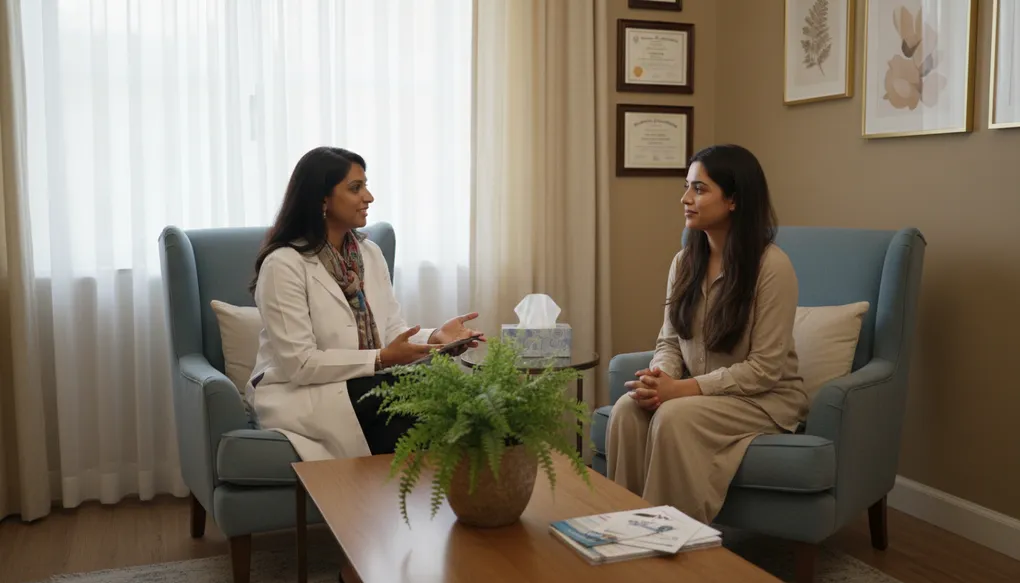
Gynecology and IVF Prompt Pack
Ready-to-use prompts for gynecologists and fertility specialists—patient counselling, procedure explanations, pregnancy guidance, and sensitive communication.
Few specialties require the delicate balance of clinical expertise and emotional intelligence that gynecology and fertility medicine demand. You are not just treating conditions—you are navigating deeply personal journeys involving fertility dreams, pregnancy anxieties, family pressures, and sometimes, profound loss.
This prompt pack builds on the foundations from E2 (Specialty Template Library) and F1 (Tone and Language Matching) to give you ready-to-use prompts specifically designed for OB-GYN and IVF practice in the Indian context.
Why this specialty needs its own pack:
- Cultural sensitivities around reproductive health and fertility
- Family involvement (often mother-in-law, husband) in consultations
- Emotional weight of fertility struggles, pregnancy loss, and difficult diagnoses
- Need for clear communication about complex procedures like IVF
- Privacy concerns in joint family settings
- Taboo topics that patients hesitate to discuss openly
What Problem This Solves
Gynecologists and fertility specialists face unique communication challenges:
- Explaining PCOS to a newly married woman whose in-laws are already asking about grandchildren
- Breaking news of pregnancy loss to a couple who has been trying for years
- Simplifying IVF protocols that involve multiple medications, injections, and appointments
- Counselling menopausal women who may feel their concerns are dismissed as “just aging”
- Discussing sensitive procedures like D&C or hysterectomy with anxious patients
- Navigating family dynamics where the patient’s mother-in-law asks all the questions
- Addressing taboo topics like sexual health, contraception for unmarried women, or recurrent pregnancy loss
Generic prompts fail here because they miss the cultural nuance and emotional sensitivity these conversations require. This pack gives you prompts crafted specifically for these situations—prompts that acknowledge family involvement, cultural pressures, and the deeply personal nature of reproductive health.
How to Do It (Steps)
Step 1: Identify the Communication Type
| Category | Emotional Weight | Family Involvement | Example Situations |
|---|---|---|---|
| Education | Low-Medium | Often present | PCOS explanation, pregnancy diet |
| Procedure explanation | Medium | Usually present | IVF protocol, hysterectomy consent |
| Routine guidance | Low | Varies | Antenatal visits, post-delivery care |
| Sensitive results | High | Sometimes exclude initially | Infertility diagnosis, abnormal reports |
| Loss communication | Very High | Include carefully | Pregnancy loss, failed IVF cycle |
| Lifestyle/Fertility | Medium | May need privacy | Weight management, sexual health |
Step 2: Assess Privacy Needs
Before creating patient communication:
- Can this be discussed with family present? (Most antenatal education: yes)
- Does the patient need private counselling first? (Abnormal Pap smear, infertility cause)
- Should family be informed separately? (Some diagnoses, mental health concerns)
- Who is the decision-maker? (Patient always, but acknowledge family role)
Step 3: Consider Cultural Context
For Indian gynecology practice, factor in:
- Fertility pressure: Often begins immediately after marriage
- Joint family dynamics: Mother-in-law may accompany patient
- Privacy concerns: Patient may not share everything in front of family
- Religious/cultural beliefs: Fasting during pregnancy, post-delivery rituals
- Gender preferences: Sensitivity needed (avoid any gender selection implications)
- Taboo topics: Sexual health, contraception, menstrual issues often under-discussed
Step 4: Choose Appropriate Tone
| Situation | Tone | Key Elements |
|---|---|---|
| PCOS education | Reassuring, hopeful | Emphasize manageability, lifestyle role |
| IVF counselling | Supportive, realistic | Balance hope with honest success rates |
| Pregnancy loss | Compassionate, gentle | Acknowledge grief, avoid platitudes |
| Menopause | Normalizing, empowering | Frame as transition, not decline |
| Procedure consent | Clear, non-alarming | Explain without inducing panic |
Step 5: Include Appropriate Family Involvement
Indian healthcare is family-centered. Your prompts should:
- Acknowledge that family will often be present
- Provide information suitable for sharing with family
- Include “what family can do to help” sections
- Create separate, simpler summaries for family members when needed
- Respect patient privacy for sensitive personal matters
Example Prompts (2-5)
Example 1: PCOS Patient Education
Role: Act as a compassionate gynecologist explaining PCOS to a patient in an Indian urban clinic.

Context: Patient is a 24-year-old recently married woman diagnosed with PCOS. She came for irregular periods but her mother-in-law (present in consultation) immediately asked about fertility. The patient seems anxious about both her symptoms and the fertility pressure. She is educated (graduate) and works in IT.

Task: Create a patient education handout about PCOS that:
1. Explains what PCOS is in simple terms
2. Addresses the fertility concern reassuringly (PCOS does not mean infertility)
3. Outlines lifestyle modifications specific to Indian vegetarian diet
4. Explains the treatment approach
5. Includes a section "For Family Members" that gently educates about the condition

Format:
- Main explanation in clear paragraphs
- Lifestyle tips as bullet points
- "Common Questions" section addressing fertility concerns
- Separate "For Family" section at the end

Constraints:
- Reassuring but honest tone
- Avoid medical jargon—explain any terms used
- Include Indian food examples for diet suggestions
- Address fertility concern directly but without false promises
- Do not include medication names (I will add those)
- Keep total length under 500 words
- Include reminder that PCOS is manageable with proper care
Example 2: IVF Protocol Explanation
Role: You are an IVF coordinator at a fertility clinic, skilled at explaining complex protocols in simple terms.

Context: A couple (wife 34, husband 36) is starting their first IVF cycle after 4 years of trying to conceive. They are nervous, overwhelmed by information online, and anxious about the process. The wife is a teacher, husband is a bank manager. They have supportive families but want to keep the IVF private for now.

Task: Create a clear, step-by-step explanation of the IVF process they are about to undergo, from day 1 to embryo transfer.

Include:
1. Timeline overview (what happens each week)
2. Medication schedule framework (I will add specific drugs)
3. What to expect during stimulation phase
4. Egg retrieval day—what happens, recovery
5. Embryo transfer—the process, rest requirements
6. Two-week wait—what to do and not do
7. Emotional preparation section

Format:
- Week-by-week timeline with key events
- Bullet points for daily tasks during each phase
- "What You Might Feel" section addressing physical and emotional experiences
- FAQ section addressing common first-timer concerns

Constraints:
- Hopeful but realistic tone
- Acknowledge this is emotionally challenging
- Include practical tips (time off work, support system)
- Do not include success statistics (I will discuss those personally)
- Mention that the husband's role and support matter
- Keep medically accurate but not overwhelming
- Under 600 words
Example 3: Pregnancy Loss Communication
Role: You are a compassionate gynecologist helping a colleague prepare for a difficult conversation about pregnancy loss.

Context: A 29-year-old patient has come for her 12-week scan with her husband. The scan shows no fetal heartbeat—a missed miscarriage. This was a planned, wanted pregnancy after 2 years of trying. The couple is in the waiting room, expecting good news.

Task: Help me prepare talking points for breaking this news, including:
1. How to begin the conversation (what to say first)
2. Key information to convey about missed miscarriage
3. Options for management (I will fill in medical details)
4. What NOT to say (harmful phrases to avoid)
5. How to address their grief in the moment
6. Follow-up support information

Format:
- Conversation framework with suggested phrases
- "Do not say" list with brief explanations
- Options presented as a simple list (to discuss later)
- Emotional support points
- Follow-up care reminders

Constraints:
- Prioritize empathy over information in initial conversation
- Avoid platitudes like "it was meant to be" or "you can try again"
- Acknowledge the loss as real grief
- Do not rush—give space for reaction
- Include suggestion for privacy (offer to have them stay in room)
- Keep under 400 words—this is a framework, not a script
- Mention that healing takes time and grief is normal
Example 4: Week-by-Week Pregnancy Guidance
Role: Act as a friendly prenatal educator creating content for a first-time pregnant mother.

Context: Patient is a 28-year-old primigravida, currently 10 weeks pregnant. She is anxious (first pregnancy), educated (MBA), and lives in a joint family in Delhi. Her mother-in-law has many traditional beliefs about pregnancy that sometimes conflict with medical advice. The patient wants evidence-based guidance she can follow while respecting family traditions where safe.

Task: Create pregnancy guidance for weeks 10-14 (first trimester completion) including:
1. Baby's development this month
2. Common symptoms and what is normal
3. Diet and nutrition (Indian food focus)
4. What to avoid (evidence-based, not fear-based)
5. Exercise and activity guidance
6. "Working with Family Traditions" section—which common practices are fine vs need modification
7. Warning signs that need immediate attention

Format:
- Week-by-week snippets for baby development
- Bullet points for practical guidance
- Table for "Traditional Belief vs Medical View" (respectful, not dismissive)
- Red/Yellow/Green format for warning signs

Constraints:
- Reassuring tone—first trimester anxiety is common
- Balance scientific accuracy with cultural sensitivity
- Do not dismiss family traditions outright—acknowledge, then clarify
- Include food recommendations using common Indian foods
- Vegetarian-friendly (she can specify if non-veg)
- Under 600 words
- Include reminder that every pregnancy is different
Example 5: Menopause Counselling
Role: You are an experienced gynecologist who specializes in midlife women's health, known for making patients feel heard and validated.

Context: A 49-year-old patient has come with complaints of irregular periods, hot flashes, mood swings, and poor sleep for the past 8 months. She is a homemaker, her children are in college, and she feels her complaints are being dismissed by family as "just stress" or "becoming old." She seems embarrassed to discuss her symptoms and mentioned her husband thinks she is "overreacting."

Task: Create a patient education document about perimenopause/menopause that:
1. Validates her symptoms as real and medical (not "in her head")
2. Explains what is happening in her body
3. Lists common symptoms (so she knows what else might come)
4. Discusses management options (lifestyle, if needed—medical)
5. Includes a section for her to share with family
6. Empowers her to advocate for her own health needs

Format:
- Warm, validating opening paragraph
- "What is Happening" explanation in simple terms
- Symptom checklist (tick the ones you experience)
- Management options as a menu of choices
- "Dear Family" section—educating family members respectfully
- Self-care tips specific to Indian lifestyle

Constraints:
- Empowering, not diminishing tone
- Frame as a natural transition, not a disease
- Acknowledge the emotional component without pathologizing it
- Include practical tips for hot flashes, sleep, mood
- Address the common dismissal women face
- Do not recommend specific HRT—mention it as an option to discuss
- Under 500 words
Bad Prompt → Improved Prompt
Scenario: Explaining hysterectomy to an anxious patient
Bad Prompt:
“Explain hysterectomy to a patient”
What is wrong:
- No patient context (age, reason for surgery, anxiety level)
- No cultural considerations
- No format specified
- Does not address fears or family involvement
- No guidance on tone
What you get: A clinical, textbook explanation that may increase anxiety rather than reduce it.
Improved Prompt:
Role: Act as a compassionate gynecologist explaining a planned surgery to an anxious patient.

Context: Patient is a 45-year-old woman with large uterine fibroids causing heavy bleeding and anemia. She needs a hysterectomy. She is very anxious—she has never had surgery before and is worried about "losing her womanhood." Her husband and mother-in-law are supportive but also anxious. She is a homemaker in Hyderabad, moderate education (12th pass), speaks Telugu and Hindi.

Task: Create a procedure explanation document that:
1. Explains why hysterectomy is recommended (fibroid size, symptoms, why other treatments may not work)
2. Describes what will be removed and what will remain (ovaries, if applicable)
3. Addresses the "womanhood" concern sensitively—explain that femininity is not defined by uterus
4. Explains the surgery process simply (not scary details)
5. Post-surgery recovery timeline
6. Long-term life after hysterectomy (she will feel better, not less)
7. Section for family: how they can support her

Format:
- Warm, reassuring opening
- Simple numbered explanations
- "Your Concerns Addressed" section tackling common fears
- Recovery timeline as visual table
- Family support points as bullet list

Constraints:
- Reassuring, empowering tone throughout
- Avoid scary medical terms—simplify everything
- Address the femininity concern directly and sensitively
- Include that many women feel better after recovery
- Do not include surgical risks list (I will discuss verbally)
- Bilingual option: Hindi in brackets for key terms
- Under 500 words
- End with encouragement and support reminder
Why it is better:
- Specific patient context including anxiety and concerns
- Addresses cultural concern about “womanhood”
- Includes family support angle
- Specifies reassuring tone
- Bilingual option for comfort
- Structures information to reduce, not increase, anxiety
Common Mistakes
1. Ignoring Family Dynamics
In Indian practice, family is almost always involved. Writing prompts that only address the patient misses how information will actually be received and shared.
Fix: Add “Include section for family members” or “make suitable to explain in front of mother-in-law.”
2. Using Insensitive Language Around Fertility
Phrases like “failed to conceive,” “infertility problem,” or “barren” cause harm. Even AI outputs may include insensitive language if not guided.
Fix: Specify “use sensitive, non-blaming language about fertility challenges” and “frame as ‘journey’ not ‘failure.‘“
3. Over-Medicalizing Emotional Situations
When communicating pregnancy loss or failed IVF cycles, prompts that focus on medical facts miss the emotional need.
Fix: Specify “prioritize empathy over information” or “emotional support first, medical details second.”
4. Dismissing Traditional Practices Outright
Many patients follow traditional practices during pregnancy or postpartum. Dismissing these alienates patients and families.
Fix: Add “respectfully address traditional practices—clarify which are safe, which need modification, and which to avoid, without dismissing cultural values.”
5. One-Size-Fits-All Fertility Communication
A 25-year-old with PCOS and a 40-year-old with low ovarian reserve need very different conversations, even about the same topic (fertility).
Fix: Always include age, fertility history, and specific diagnosis in your prompt context.
6. Forgetting Privacy Needs
Some information should not be shared in front of family members initially. Prompts for sensitive results need to acknowledge this.
Fix: Specify “create version for private discussion first” or “mark which sections are for patient only.”
7. Being Falsely Optimistic About IVF
Couples starting IVF need hope but also realistic expectations. Prompts that only encourage can set up for devastating disappointment.
Fix: Add “balance hope with realistic expectations” and “acknowledge this is emotionally and physically demanding.”
Clinic-Ready Templates
Template 1: PCOS Education Generator
Role: Act as a gynecologist specializing in PCOS management in an Indian clinic.

Context: Patient is [AGE]-year-old woman diagnosed with PCOS.
Marital status: [SINGLE/MARRIED/TRYING TO CONCEIVE]
Main concerns: [IRREGULAR PERIODS/FERTILITY/WEIGHT/HAIR GROWTH/ACNE]
Family present: [YES—WHO/NO]
Education level: [BASIC/MODERATE/HIGH]

Task: Create PCOS education material covering:
1. What PCOS is (simple explanation)
2. Why her specific symptoms are occurring
3. Lifestyle modifications (Indian diet focus)
4. Treatment approach overview
5. Fertility information (appropriate to her concern level)
6. Long-term management perspective

Format:
- Simple explanation paragraphs
- Diet tips as bullet points with Indian food examples
- Exercise suggestions suitable for Indian women
- FAQ section addressing her specific concerns
- [IF FAMILY PRESENT: Add "For Family" section]

Constraints:
- Reassuring tone—PCOS is manageable
- Avoid blame (it is not her fault)
- Indian vegetarian food focus for diet
- Do not mention specific medications (I will add)
- Address fertility realistically if relevant
- Under [WORD LIMIT] words
Template 2: IVF Journey Guide
Role: You are an IVF coordinator creating a patient-friendly treatment guide.

Context:
- Couple: Wife [AGE], Husband [AGE]
- IVF cycle number: [FIRST/SECOND/THIRD+]
- Diagnosis: [PRIMARY DIAGNOSIS]
- Emotional state: [ANXIOUS/HOPEFUL/EXHAUSTED/DETERMINED]
- Privacy preference: [KEEPING PRIVATE/FAMILY KNOWS]

Task: Create an IVF journey guide including:
1. Protocol overview (I will add specific medications)
2. Timeline from start to pregnancy test
3. What to expect physically during stimulation
4. Egg retrieval day preparation
5. Embryo transfer process
6. The two-week wait (TWW) guidance
7. Emotional support resources and tips
8. Partner's role and how they can help

Format:
- Week-by-week or phase-by-phase breakdown
- Daily checklist during active treatment
- "What to Expect" sections for each phase
- Emotional wellness tips integrated throughout
- Space for personalized notes

Constraints:
- Hopeful but not falsely optimistic
- Acknowledge the emotional and physical toll
- Do not include success percentages (discuss in person)
- Practical tips for managing work and treatment
- Include self-care suggestions
- Under 700 words
Template 3: Pregnancy Week-by-Week Guide
Role: Act as a prenatal care coordinator creating weekly pregnancy guidance.

Context:
- Patient: [AGE]-year-old, [PRIMI/MULTI]gravida
- Current weeks: [WEEK RANGE, e.g., 12-16]
- Risk factors: [NONE/LIST ANY]
- Living situation: [NUCLEAR/JOINT FAMILY]
- Dietary preference: [VEG/NON-VEG/EGGETARIAN]
- Working status: [WORKING/HOMEMAKER]

Task: Create pregnancy guidance for weeks [X] to [Y] including:
1. Baby's development highlights
2. Physical changes mother may experience
3. Nutrition focus for this period
4. Exercise and activity guidelines
5. Warning signs to watch for
6. Common concerns addressed
7. Preparation tasks for this phase

Format:
- Week-by-week development snippets
- Symptom management tips as bullet points
- Food recommendations table (Indian foods)
- Exercise suggestions (pregnancy-safe)
- Warning signs in traffic light format
- "This Week's Task" checklist

Constraints:
- Reassuring, excited tone
- Indian food and lifestyle context
- Include [VEG/NON-VEG] options
- Acknowledge family involvement where appropriate
- Evidence-based but accessible
- Under [WORD LIMIT] words
Template 4: Procedure Consent Explanation
Role: Act as a gynecologist explaining a surgical procedure to help with informed consent.

Context:
- Patient: [AGE]-year-old woman
- Procedure: [PROCEDURE NAME]
- Indication: [WHY NEEDED]
- Patient's anxiety level: [LOW/MODERATE/HIGH]
- Previous surgeries: [YES—WHAT/NO]
- Family support: [DESCRIBE]
- Education level: [BASIC/MODERATE/HIGH]

Task: Create a patient-friendly procedure explanation covering:
1. Why this procedure is recommended
2. What will happen (simple step-by-step)
3. Anaesthesia type and what to expect
4. Recovery timeline (hospital stay, home recovery)
5. What to expect post-procedure (pain, bleeding, restrictions)
6. Long-term outcome expectations
7. Questions to ask before surgery
8. How family can help during recovery

Format:
- Simple paragraphs for explanation
- Timeline as visual table
- "After Surgery" expectations as bullet points
- "Questions to Ask" as checklist
- Family support points

Constraints:
- Reassuring, not alarming tone
- Explain medical terms simply
- Do not include exhaustive risk list (I will discuss)
- Focus on what she can control
- Include practical preparation tips
- Under [WORD LIMIT] words
Template 5: Sensitive Result Communication
Role: You are a compassionate gynecologist preparing to communicate a difficult diagnosis.

Context:
- Patient: [AGE]-year-old woman
- Result/Diagnosis: [DIAGNOSIS]
- Patient's likely emotional state: [ANXIOUS/UNAWARE/ALREADY CONCERNED]
- Family present: [YES—WHO/WILL BE CALLED IN AFTER]
- Previous history: [RELEVANT HISTORY]

Task: Create a communication framework including:
1. Opening statement (how to begin)
2. Key information to convey (essential points only)
3. Immediate emotional support phrases
4. What NOT to say (harmful phrases)
5. Next steps to discuss
6. When to bring in family (if applicable)
7. Follow-up support plan

Format:
- Conversation framework (not word-for-word script)
- Suggested phrases as examples
- "Avoid These Phrases" list
- Next steps as simple numbered list
- Emotional support reminders

Constraints:
- Empathy first, details second
- Give patient time to process
- Avoid medical jargon in initial disclosure
- Do not minimize or over-reassure
- Include silence as a valid response
- Mention professional support if needed
- Keep framework under 300 words
Safety Note
Gynecology and fertility communication carries significant emotional weight. Use these prompts responsibly.
Critical Guidelines:
-
AI cannot replace human empathy. For pregnancy loss, infertility diagnosis, or other emotionally devastating news, AI can help you prepare—but the conversation requires your genuine presence and compassion.
-
Never use AI to communicate bad news directly to patients. No AI-generated message should deliver news of pregnancy loss, cancer diagnosis, or IVF failure. Use AI only to help you prepare.
-
Privacy is paramount. Never include identifiable patient information in prompts. This is especially critical in reproductive health where stigma exists.
-
Verify medical accuracy. Always check AI-generated content for medical accuracy before sharing. IVF protocols, medication interactions, and pregnancy guidance must be verified.
-
Cultural sensitivity is not optional. Indian patients come with diverse backgrounds—religious, regional, educational. Review AI outputs for cultural appropriateness.
-
Fertility communication requires extra care. Language around fertility should never blame the patient. Watch for phrases like “failure,” “fault,” or “problem with your body.”
-
Involve mental health support. For recurrent pregnancy loss, failed IVF cycles, or infertility diagnoses, always consider recommending counselling support.
-
Family involvement has limits. While family support is valuable, patient privacy comes first. Some discussions should happen privately before involving family.
Remember: These prompts help you create better communication materials. The clinical decisions, the emotional support, and the human connection—that is all you.
Copy-Paste Prompts
Quick PCOS Explanation
Create PCOS education for a [AGE]-year-old [MARRIED/SINGLE] woman.
Main concern: [FERTILITY/PERIODS/WEIGHT/SYMPTOMS].
Include: what PCOS is, why symptoms happen, lifestyle tips (Indian diet),
and reassurance about management. Tone: reassuring, not alarming.
Keep under 300 words. [ADD: section for family if applicable]
IVF Protocol Summary
Create a simple IVF process overview for a couple starting their [FIRST/Nth] cycle.
Include: timeline from start to pregnancy test, what to expect each phase,
practical tips for managing treatment with work, emotional preparation,
and partner's support role. Tone: hopeful but realistic.
Keep under 500 words. Do not include success statistics.
Pregnancy Week Update
Create pregnancy guidance for weeks [X-Y] for a [AGE]-year-old [PRIMI/MULTI].
Include: baby development, physical changes, diet tips (Indian [VEG/NON-VEG]),
safe exercise, warning signs (traffic light format).
Tone: reassuring, excited. Living situation: [JOINT/NUCLEAR] family.
Keep under 400 words.
Menopause Validation and Education
Create menopause education for a [AGE]-year-old woman whose symptoms are
being dismissed by family. Include: validation that symptoms are real,
what is happening in her body, common symptoms checklist, management
options, and a "Dear Family" section educating them respectfully.
Tone: empowering, validating. Keep under 400 words.
Post-Delivery Warning Signs Card
Create bilingual (Hindi-English) warning signs card for new mother
going home after [NORMAL/CESAREAN] delivery.
Include: normal things to expect (reassurance), when to call clinic,
when to rush to hospital—for both mother and baby.
Format: traffic light system (Green/Yellow/Red).
Suitable to share with family. Keep points under 8 words each.
Procedure Explanation (Hysterectomy/D&C/Laparoscopy)
Explain [PROCEDURE] to a [AGE]-year-old patient with [MODERATE/HIGH] anxiety.
Reason for surgery: [INDICATION].
Include: why needed, what happens, recovery timeline, what to expect after,
how family can help. Address common fears without creating new ones.
Tone: reassuring, clear. Do not list all risks (I will discuss).
Keep under 400 words.
Fertility Concern Initial Counselling
Create initial counselling points for a [AGE]-year-old woman concerned
about fertility. Situation: [TRYING FOR X MONTHS/YEARS, DIAGNOSIS IF ANY].
Include: validation of concern, what evaluation involves, timeline
expectations, lifestyle factors, and emotional support acknowledgment.
Tone: supportive, non-blaming. Do not promise outcomes.
Keep under 300 words.
Pregnancy Loss Support Communication
Help me prepare to communicate pregnancy loss to a [AGE]-year-old patient
at [X] weeks. This was [FIRST/Nth] pregnancy, [SPONTANEOUS/PLANNED/AFTER FERTILITY TREATMENT].
Include: how to begin the conversation, key phrases to use, what NOT to say,
immediate emotional support points, and next steps framework.
Format: conversation framework, not script. Focus on empathy first.
Keep under 300 words.
Do’s and Don’ts
Do’s
- Do include family context—Indian gynecology practice involves families
- Do specify emotional tone for sensitive communications
- Do use culturally appropriate language about fertility (journey, not failure)
- Do create separate family education sections when helpful
- Do address traditional practices respectfully, not dismissively
- Do request bilingual formats for patient comfort
- Do acknowledge the emotional weight of fertility and pregnancy topics
- Do verify all medical information before sharing with patients
- Do recommend mental health support for significant losses
- Do maintain patient privacy—never include identifiers in prompts
Don’ts
- Don’t use AI to deliver bad news directly to patients
- Don’t ignore the emotional component of reproductive health
- Don’t use blaming language about fertility (“failure,” “problem”)
- Don’t dismiss patient anxiety or concerns in your prompt framing
- Don’t promise outcomes for fertility treatment in AI-generated materials
- Don’t forget that mothers-in-law often attend consultations
- Don’t create materials that could increase anxiety unnecessarily
- Don’t include identifiable patient information in prompts
- Don’t skip verification—reproductive health has high emotional stakes
- Don’t use one-size-fits-all prompts—every fertility journey is different
1-Minute Takeaway
Gynecology prompts need: clinical accuracy + emotional sensitivity + cultural awareness
Quick formula for OB-GYN prompts:
Role: Compassionate gynecologist/fertility specialist
Context: [Age, concern, emotional state, family situation, cultural factors]
Task: [Education/Explanation/Counselling]
Tone: [Reassuring/Empowering/Gentle/Hopeful-but-realistic]
Include: [Family section if applicable, cultural considerations]
Safety: [Verify before use, maintain privacy, human delivery for bad news]
The Three Filters for Gynecology Communication:
- Is it medically accurate? (Verify before sharing)
- Is it emotionally appropriate? (Match tone to situation)
- Is it culturally sensitive? (Consider family, traditions, pressures)
Special Situations Checklist:
- Fertility concerns: Hopeful but realistic, never blame patient
- Pregnancy loss: Empathy first, medical details second
- IVF counselling: Balance hope with honest expectations
- Menopause: Validate, normalize, empower
- Procedure consent: Reassure, inform, reduce anxiety
Remember:
- Family is part of the picture in Indian practice
- Traditional practices deserve respectful engagement
- Privacy needs vary—some things are for patient only first
- AI helps you prepare; human connection delivers the care
- The emotional weight of reproductive health is real—honour it
The goal: Every patient should feel heard, informed, and supported—whether they are starting their fertility journey, celebrating a pregnancy, or navigating loss.
This prompt pack is part of the specialty series. For foundational techniques, see E2 (Specialty Template Library) and F1 (Tone and Language Matching).