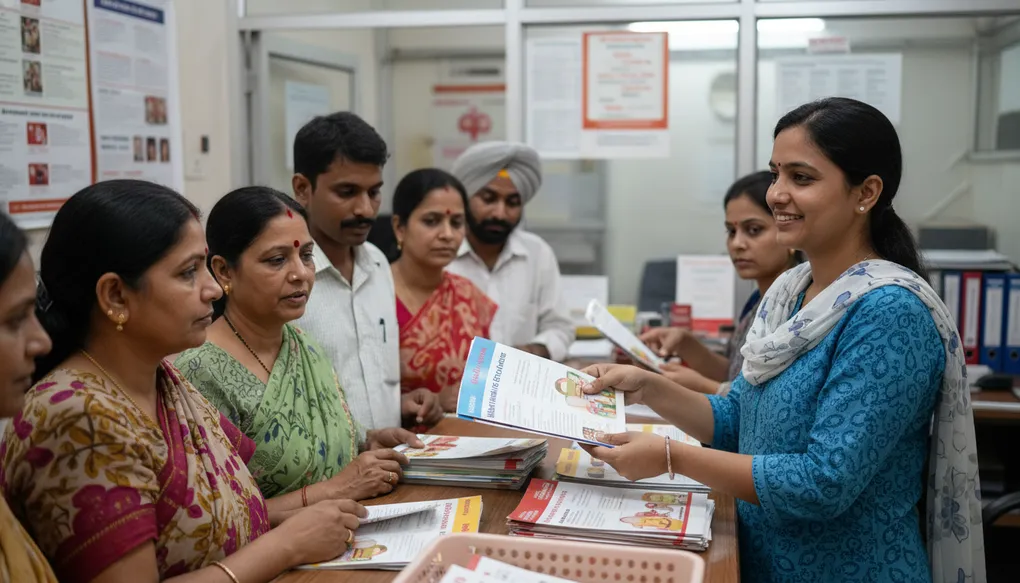
Patient Leaflets (Bilingual)
Create professional patient education leaflets in English and Hindi—improve understanding, compliance, and patient satisfaction with clear materials.
A patient leaves your clinic with a diagnosis of Type 2 diabetes. You spent ten minutes explaining diet, exercise, medication timing, and warning signs. Three days later, they call asking, “Doctor, can I eat rice?” They have forgotten nearly everything.
This is not their fault. Studies show patients forget 40-80% of medical information immediately after a consultation. The solution? Give them something to take home—a well-designed bilingual leaflet they can read, share with family, and refer back to.
This article teaches you how to use AI to create professional patient education leaflets in English and Hindi, designed for Indian clinics and Indian literacy levels.
What Problem This Solves
Indian doctors face unique challenges with patient education:
- Language barriers: Patients may understand spoken Hindi but struggle with English medical terms. Or they may read English but prefer information in their mother tongue.
- Literacy variations: Education levels vary from postgraduate to barely literate. One-size-fits-all handouts fail most patients.
- Time constraints: Creating custom leaflets for each condition, procedure, or medication takes hours. Most doctors give up and rely on verbal instructions alone.
- Family involvement: In Indian healthcare, the patient’s family often manages care. A printed leaflet lets the whole family understand the instructions.
- Recall problems: Anxiety during consultations impairs memory. A take-home leaflet reinforces your verbal advice.
The solution: Use AI to generate professional, bilingual leaflets in minutes—customised for your patient population, formatted for easy reading, and ready to print.
When you master leaflet creation, you can:
- Hand every patient something tangible to take home
- Reduce repeat phone calls asking “What did you say about…?”
- Improve medication compliance with clear written instructions
- Include family members who were not present in the consultation
- Build a library of reusable leaflets for common conditions
How to Do It (Steps)
Step 1: Identify the Leaflet Type
Different situations need different leaflets:
| Leaflet Type | Purpose | When to Use |
|---|---|---|
| Condition Explanation | Help patients understand their diagnosis | New diagnosis, chronic disease management |
| Procedure Preparation | What to do before a test or procedure | Before endoscopy, surgery, imaging |
| Medication Information | How to take medicines correctly | New prescriptions, complex regimens |
| Lifestyle Advice | Diet, exercise, daily routine changes | Diabetes, hypertension, heart disease |
| Post-Visit Care | What to do after leaving the clinic | After procedures, wound care, follow-up |
Step 2: Determine the Reading Level
For most Indian patient populations, target Class 8 reading level (age 13-14 equivalent). This ensures:
- Educated patients do not feel condescended to
- Less educated patients can still understand
- Family members of varying education can all read it
Tip: If your clinic serves a highly educated population (corporate clinics, metro areas), you can target Class 10 level. For rural or low-literacy populations, target Class 6 level with more pictures and fewer words.
Step 3: Structure Your Prompt with the 5-Part Formula
Apply what you learned in B1 (The 5-Part Prompt Formula) and B2 (Format Control):
- Role: Patient education writer for Indian clinics
- Context: Condition, patient type, literacy level, languages needed
- Task: Create a bilingual leaflet with specific sections
- Format: Clear headings, bullet points, bilingual layout
- Constraints: Reading level, word limits, what to include/exclude
Step 4: Request Bilingual Format
For English-Hindi leaflets, specify one of these formats:
Option A: Side-by-Side
Format each section as:
[ENGLISH HEADING]
English content here.

[HINDI HEADING IN DEVANAGARI]
Hindi content here.
Option B: Section-by-Section
Present the complete leaflet in English first, then the complete
Hindi translation below, separated by a clear divider.
Option C: Parallel Columns (for print)
Format for a two-column layout:
- Left column: English
- Right column: Hindi (Devanagari script)
Step 5: Review and Verify Translations
Critical safety step: AI-generated Hindi translations may contain errors, especially for medical terms. Always:
- Have a Hindi-speaking staff member review the translation
- Verify that medical terms are translated appropriately (some are better left in English with Hindi phonetic spelling)
- Check that the Hindi reads naturally, not like machine translation
- Ensure cultural appropriateness of any examples given
Step 6: Format for Printing
Before printing, ensure:
- Text is large enough (minimum 12pt for body, 14pt for headings)
- Hindi Devanagari fonts are properly installed and rendering
- Adequate white space between sections
- Important warnings are highlighted (bold or boxed)
- Contact information and clinic name are included
Example Prompts
Example 1: Diabetes Condition Leaflet
You are a patient education writer for an Indian urban clinic. You specialise in creating easy-to-understand health materials.

Create a bilingual (English and Hindi) patient education leaflet about Type 2 Diabetes for newly diagnosed patients.

Include these sections:
1. What is Diabetes? (simple explanation)
2. Why does it happen? (brief, non-technical)
3. Warning signs to watch for
4. Foods to eat and foods to limit (Indian diet focus)
5. Daily habits that help
6. When to contact your doctor immediately
7. Reminder about medication and follow-up

Format:
- Each section in English first, then Hindi (Devanagari script) immediately below
- Use bullet points, maximum 4-5 points per section
- Add a small "Remember" box at the end with 3 key takeaways

Language: Class 8 reading level. No medical jargon—explain any necessary terms simply.
Limit: Fit on 2 sides of an A4 page.

End with: "This leaflet supports your doctor's advice. Follow your doctor's specific instructions."
Example 2: Pre-Endoscopy Preparation Leaflet
You are a patient instruction writer for a gastroenterology clinic in India.

Create a bilingual preparation guide (English and Hindi) for patients scheduled for upper GI endoscopy.

Include:
1. What is an endoscopy? (one-paragraph explanation)
2. Why your doctor has ordered this test
3. How to prepare (day before, night before, morning of)
4. What to bring to the clinic
5. What to expect during the procedure
6. After the procedure—what happens next
7. Warning signs after the procedure (when to call)

Format:
- Clear numbered steps for preparation
- Time-based format (e.g., "24 hours before:", "Night before:", "Morning of procedure:")
- English section complete, then Hindi translation complete
- Include a checkbox list patients can tick as they prepare

Language: Simple English and Hindi, Class 8 level.
Tone: Reassuring—many patients are anxious about endoscopy.
Limit: 1.5 to 2 A4 pages.

Include clinic contact number placeholder: [CLINIC PHONE NUMBER]
Example 3: Medication Information Leaflet
You are a medication counsellor at an Indian pharmacy/clinic.

Create a bilingual medication information leaflet for a patient starting Metformin for Type 2 Diabetes.

Include:
1. What is this medicine for?
2. How to take it (timing, with food, etc.)
3. Common side effects and what to do
4. Important warnings (when NOT to take)
5. Storage instructions
6. What to do if you miss a dose
7. When to contact your doctor

Format:
- Section-by-section, English then Hindi for each
- Use simple icons descriptions: [PILL ICON], [CLOCK ICON], [WARNING ICON] where appropriate for later design
- Highlight warnings in bold

Language: Very simple—Class 6-8 level. Many patients on chronic medication have varying literacy.
Limit: Single A4 page, both languages.

Note: Do not include dosage—that will be written by the doctor for each patient.
Example 4: Post-Surgery Care Leaflet
You are a surgical patient educator for an Indian hospital.

Create a bilingual post-operative care leaflet for patients discharged after laparoscopic cholecystectomy (gallbladder removal).

Include:
1. What was done (simple explanation)
2. Wound care at home
3. Pain management (general guidance)
4. Diet progression (day 1, week 1, after 2 weeks)
5. Activity restrictions and when to resume normal activities
6. Warning signs requiring immediate medical attention
7. Follow-up appointment reminder

Format:
- Day-by-day format for the first week
- Bullet points for do's and don'ts
- English complete, then Hindi complete (for easier printing)
- Highlight emergency warning signs in a box

Language: Class 8 reading level, reassuring tone.
Limit: 2 A4 pages maximum.

Include placeholders for:
- [SURGERY DATE]
- [FOLLOW-UP DATE]
- [EMERGENCY CONTACT NUMBER]
Example 5: Lifestyle Advice Leaflet for Hypertension
You are a preventive health educator for an Indian clinic.

Create a bilingual lifestyle modification leaflet for patients with newly diagnosed hypertension (high blood pressure).

Include:
1. What is high blood pressure? (simple explanation)
2. Why lifestyle changes matter
3. Diet changes:
   - Salt reduction (Indian cooking context)
   - Foods to eat more of
   - Foods to limit
4. Physical activity recommendations
5. Stress management tips
6. Home BP monitoring guidance
7. When to seek immediate help

Format:
- Practical, actionable tips (not just "eat healthy" but specific Indian foods)
- Side-by-side format: English left, Hindi right (for two-column printing)
- Include a simple BP diary template at the bottom

Language: Class 8 level, motivating and positive tone.
Limit: 2 A4 pages.

Focus on practical changes achievable by middle-class Indian families.
Bad Prompt → Improved Prompt
Bad Prompt
Write a leaflet about diabetes in Hindi.What you get: A wall of text, possibly in Romanised Hindi (not Devanagari), at an unpredictable reading level, without structure or clear sections. You spend 30 minutes reformatting and still are not sure if the Hindi is accurate.
Improved Prompt
You are a patient education writer for an Indian diabetes clinic.

Create a bilingual patient leaflet (English and Hindi in Devanagari script) about managing Type 2 Diabetes at home.

Target audience: Middle-aged patients, Class 8 education level, Indian diet and lifestyle.

Include these sections:
1. Understanding your diabetes (2-3 sentences)
2. Daily food choices (Indian meals: breakfast, lunch, dinner examples)
3. Foods to avoid or limit (specific Indian foods)
4. Physical activity you can do
5. Taking your medicines correctly
6. Checking your blood sugar at home
7. Warning signs—when to call the doctor

Format:
- Each section: English heading and content, then Hindi heading and content
- Bullet points, maximum 5 per section
- Include a "Daily Checklist" box with 5 tick-box items

Constraints:
- Simple language, no medical jargon
- Do not include specific medication names or dosages
- Include "Ask your doctor about..." where appropriate
- Fit on 2 A4 pages (one sheet, front and back)

End with: "Follow your doctor's specific advice. This leaflet is for general guidance only."
What you get: A structured, bilingual, print-ready leaflet appropriate for your patient population, with clear sections you can verify and customise.
Common Mistakes
Mistake 1: Trusting Hindi Translations Without Review
AI-generated Hindi may have errors—incorrect medical terms, awkward phrasing, or mistranslations that change meaning. A leaflet saying “take medicine with food” that gets translated as “take medicine as food” could be dangerous.
Fix: Always have a Hindi-speaking team member review translations before printing. Keep a glossary of verified medical term translations.
Mistake 2: Using Class 12 Reading Level for All Patients
Complex sentences and sophisticated vocabulary exclude a large portion of your patients. Even educated patients prefer simpler health information when they are unwell or anxious.
Fix: Default to Class 8 level. Use short sentences. Define any medical terms you must use.
Mistake 3: Creating One Leaflet for All Languages
Translating an English-optimised leaflet to Hindi often produces awkward text. Hindi sentence structure differs from English.
Fix: Request that both versions be created together, or ask for Hindi content that is culturally adapted, not just translated.
Mistake 4: Forgetting Regional Language Needs
Hindi does not serve all Indian patients. Tamil, Telugu, Bengali, Marathi, Gujarati—your patient population may need other languages.
Fix: Note that AI can generate leaflets in multiple Indian languages. Specify the language and script you need: “Create in English and Tamil (Tamil script).”
Mistake 5: Overloading with Information
A 5-page leaflet will not be read. Patients need key points, not comprehensive textbooks.
Fix: Limit leaflets to 2 A4 pages maximum. For complex topics, create a series of shorter leaflets rather than one long one.
Mistake 6: No Clear Visual Hierarchy
Walls of text with no headings, bullets, or emphasis make leaflets hard to scan.
Fix: Specify formatting clearly: headings, bullet points, boxes for warnings, numbered steps for instructions.
Clinic-Ready Templates
Template 1: Condition Explanation Leaflet
You are a patient education writer for an Indian [SPECIALTY] clinic.

Create a bilingual (English and Hindi) patient education leaflet about [CONDITION NAME].

Target patient: [AGE GROUP], [EDUCATION LEVEL - e.g., Class 8 reading level], [URBAN/RURAL setting]

Include these sections:
1. What is [CONDITION]? (simple 2-3 sentence explanation)
2. What causes it? (brief, patient-friendly)
3. Common symptoms
4. How is it treated? (general categories, no specific medicines)
5. What YOU can do to help (lifestyle factors)
6. Warning signs—when to get help immediately
7. Questions to ask your doctor

Format:
- Section heading in English, content in English
- Same section heading in Hindi (Devanagari), content in Hindi
- Bullet points, maximum 5 per section
- Highlight warning signs in bold

Constraints:
- [READING LEVEL] vocabulary
- Indian context for diet and lifestyle examples
- Do not recommend specific medications
- Fit on 2 A4 pages (front and back of one sheet)

End with: "This information supports your doctor's advice. Always follow your doctor's specific instructions for your situation."

Placeholders to include:
- [CLINIC NAME]
- [CLINIC CONTACT NUMBER]
- [FOLLOW-UP INSTRUCTIONS SPACE]
Template 2: Procedure Preparation Leaflet
You are a patient instruction writer for an Indian [HOSPITAL/CLINIC TYPE].

Create a bilingual (English and Hindi) preparation guide for patients scheduled for [PROCEDURE NAME].

Include:
1. What is [PROCEDURE]? (simple explanation, why it is done)
2. How to prepare:
   - 1 week before
   - 1 day before
   - Night before
   - Morning of procedure
3. What to bring:
   - Documents needed
   - Items to bring
   - What to leave at home
4. What happens during the procedure (brief, reassuring)
5. After the procedure:
   - Immediate recovery
   - Going home
   - Care at home
6. Warning signs to watch for
7. Follow-up instructions

Format:
- Time-based numbered steps for preparation
- Checkbox format so patients can tick off items
- English section complete, clear divider, Hindi section complete
- Box highlighting "Do NOT" items

Language: Class 8 reading level, calm and reassuring tone.
Limit: 2 A4 pages maximum.

Include placeholders:
- [PROCEDURE DATE: ________]
- [ARRIVAL TIME: ________]
- [CLINIC ADDRESS]
- [EMERGENCY CONTACT: ________]
Template 3: Medication Information Leaflet
You are a medication counsellor for an Indian clinic/pharmacy.

Create a bilingual (English and Hindi) medication information leaflet for patients taking [MEDICATION NAME] for [CONDITION].

Include:
1. What is this medicine?
2. What is it used for?
3. How to take it:
   - Timing
   - With or without food
   - What to avoid while taking
4. Common side effects (and what to do)
5. Serious side effects (when to stop and call doctor)
6. Missed dose—what to do
7. Storage instructions
8. Important warnings

Format:
- English and Hindi side by side (two columns) OR section by section
- Use icon placeholders: [CLOCK], [FOOD], [WARNING], [PHONE]
- Bold all warning statements
- Checkbox at bottom: "I have understood these instructions [ ]"

Language: Class 6-8 reading level (medication leaflets need to be very simple).
Limit: Single A4 page if possible, maximum 2 pages.

Note: Leave dosage blank—doctor will write patient-specific dose:
"Your dose: __________ Take: __________ times daily"

End with: "If you have questions about your medicine, ask your doctor or pharmacist."
Template 4: Post-Visit Care Leaflet
You are a patient care coordinator for an Indian [CLINIC/HOSPITAL TYPE].

Create a bilingual (English and Hindi) post-visit care leaflet for patients after [PROCEDURE/CONSULTATION TYPE].

Include:
1. What was done today (brief summary)
2. Care at home:
   - First 24 hours
   - First week
   - Ongoing care
3. Activity guidelines:
   - What you CAN do
   - What to AVOID
   - When to resume normal activities
4. Diet instructions (if applicable)
5. Medications (general guidance, specific details to be added by doctor)
6. Warning signs—contact us immediately if:
7. Follow-up appointment information
8. Contact information for questions

Format:
- Day-by-day format for first week
- Clear do's and don'ts in separate columns
- English complete section, then Hindi complete section
- Prominent box for emergency warning signs

Language: Class 8 reading level, supportive tone.
Limit: 2 A4 pages.

Include placeholders:
- [TODAY'S DATE: ________]
- [FOLLOW-UP DATE: ________]
- [DOCTOR NAME: ________]
- [CLINIC PHONE: ________]
- [EMERGENCY NUMBER: ________]
Safety Note
Translation accuracy is critical. Medical mistranslations can cause serious harm. A leaflet that incorrectly translates “do not take on empty stomach” could result in medication side effects or reduced efficacy.
Always implement this verification process:
- First review (you): Check the English content for medical accuracy
- Second review (bilingual staff): Verify Hindi translation accuracy and natural phrasing
- Third review (medical terms): Ensure medical terms are correctly translated or appropriately kept in English with Hindi phonetic spelling
- Test with patients: Have a few patients read the leaflet and tell you what they understood
Regional language considerations: For languages other than Hindi (Tamil, Telugu, Kannada, Bengali, Marathi, Gujarati, etc.), the verification process is even more important. Have a native speaker of that language review before printing.
Do not include:
- Specific medication dosages (write these by hand for each patient)
- Definitive diagnostic information
- Emergency treatment protocols (patients should call, not self-treat)
Always include:
- Disclaimer that the leaflet supports, not replaces, doctor advice
- When to seek immediate medical attention
- Clinic contact information
Copy-Paste Prompts
Prompt 1: Quick Condition Leaflet
You are a patient education writer for an Indian clinic.

Create a bilingual (English and Hindi in Devanagari) patient leaflet about [CONDITION NAME].

Sections needed:
1. What is it? (2-3 simple sentences)
2. Common symptoms
3. Treatment overview (no specific medicines)
4. What you can do at home
5. Warning signs—when to call the doctor

Format: English section, then Hindi section. Bullet points. Class 8 reading level.
Limit: 1.5 A4 pages.

End with disclaimer: "Follow your doctor's specific advice for your situation."
Prompt 2: Medication Reminder Card
You are a pharmacy patient educator in India.

Create a small bilingual (English and Hindi) medication reminder card for [MEDICATION NAME].

Include only:
1. What it is for (one line)
2. How to take (timing, with/without food)
3. Common side effects
4. When to call doctor

Format: Fit on a small card (half A5 size). Side-by-side: English left, Hindi right.
Language: Very simple, Class 6 level.

Leave blank space for: "Your dose: ________"
Prompt 3: Pre-Test Instructions
You are a diagnostic centre patient coordinator in India.

Create bilingual (English and Hindi) preparation instructions for [TEST NAME].

Include:
1. What is this test?
2. Preparation steps (numbered, with timing)
3. What to bring
4. What to expect
5. After the test

Format: Numbered checklist format. English complete, then Hindi complete.
Tone: Simple and reassuring.
Limit: 1 A4 page.

Include: [APPOINTMENT DATE: ____] [CENTRE PHONE: ____]
Prompt 4: Diet Advice Leaflet
You are a nutrition educator for an Indian healthcare setting.

Create a bilingual (English and Hindi) diet guidance leaflet for [CONDITION - e.g., diabetes, hypertension, post-surgery].

Include:
1. Why diet matters for [CONDITION]
2. Foods to eat freely (Indian foods)
3. Foods to eat in moderation
4. Foods to avoid or limit
5. Sample day meal plan (Indian breakfast, lunch, dinner)
6. Practical tips for Indian cooking
7. Eating out and festivals—how to manage

Format: Bullet points under each heading. Section-by-section bilingual (English then Hindi).
Language: Class 8 level, encouraging tone.
Limit: 2 A4 pages.

Focus on practical, affordable changes for Indian middle-class families.
Prompt 5: Emergency Warning Signs Card
You are a patient safety educator for an Indian hospital.

Create a bilingual (English and Hindi) warning signs card for patients with [CONDITION] to keep at home.

Include:
1. Title: "When to Get Help Immediately"
2. List of 5-7 warning signs/symptoms
3. What to do if you notice these signs
4. Emergency contact numbers (placeholders)
5. What information to have ready when calling

Format:
- Large, clear text (easy to read in emergency)
- Red/bold formatting markers for urgency
- Fit on a single card (A5 size)
- English on front, Hindi on back

Language: Very simple. Short phrases. Class 6 level.

Include: [EMERGENCY: ____] [CLINIC: ____] [AMBULANCE: 108]
Do’s and Don’ts
Do’s
- Do verify all Hindi (and other language) translations before printing
- Do target Class 8 reading level as your default
- Do include “when to seek help” in every leaflet
- Do use bullet points and clear headings for easy scanning
- Do leave blank spaces for patient-specific information (dosages, dates)
- Do test leaflets with actual patients before finalising
- Do include your clinic contact information
- Do build a library of verified leaflets you can reuse
- Do consider regional languages based on your patient population
- Do add a disclaimer directing patients to follow their doctor’s specific advice
Don’ts
- Don’t print AI-generated translations without human verification
- Don’t include specific medication dosages in printed leaflets (write by hand)
- Don’t create leaflets longer than 2 A4 pages—they will not be read
- Don’t use medical jargon without simple explanations
- Don’t assume all patients read Hindi—offer regional languages where needed
- Don’t forget to include emergency warning signs
- Don’t rely solely on text—consider adding simple diagrams where helpful
- Don’t distribute leaflets that have not been reviewed by a bilingual staff member
- Don’t use Romanised Hindi (English letters)—use proper Devanagari script
- Don’t create leaflets for emergency protocols—emergencies need phone calls, not reading
1-Minute Takeaway
Bilingual patient leaflets transform verbal advice into lasting reference materials. Patients forget most of what you say; they can keep reading what you give them.
The formula for every leaflet:
- Identify the type: Condition, procedure, medication, lifestyle, or post-visit
- Set the reading level: Class 8 is the safe default for most Indian patients
- Structure with sections: Use clear headings—What, Why, How, Warning Signs, Next Steps
- Request bilingual format: English and Hindi (Devanagari), or your regional language
- Verify before printing: Always have a Hindi speaker review translations
The critical safety step: AI translations can be wrong. A bilingual team member must verify every leaflet before you print and distribute it.
Start your leaflet library today. Create leaflets for your five most common conditions. Verify them once. Use them for every patient. Watch compliance improve and phone calls decrease.
One leaflet, properly made and verified, serves hundreds of patients.
This article builds on B2 (Format Control) and connects to creating other patient materials. For staff training materials, see the upcoming articles on clinic communication.