Asking for Clarification Like a Pro
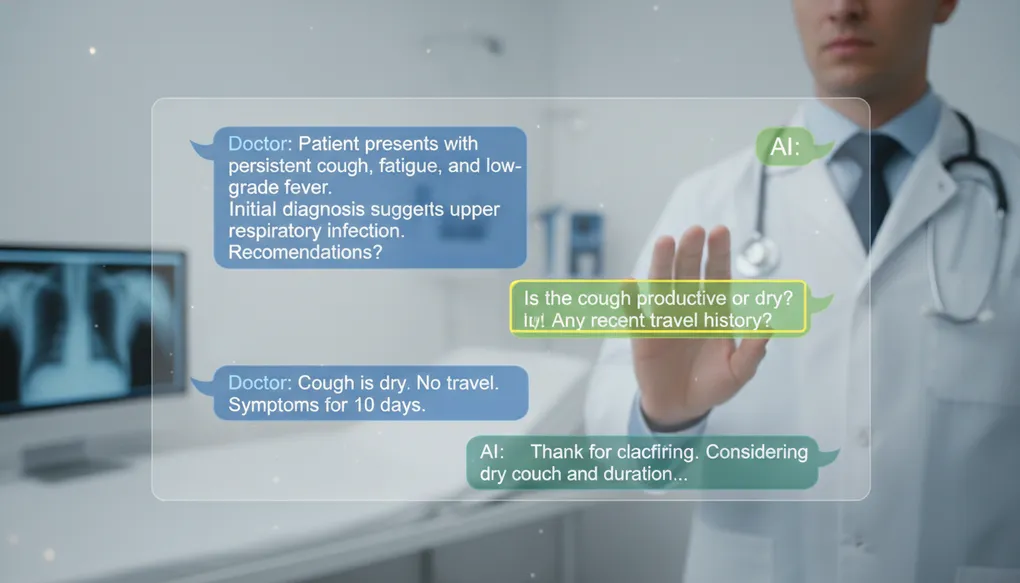
Make AI ask the right questions before giving answers—just like a good junior doctor would. Get better outputs by enabling smart clarification.
Think about the best junior resident you have trained. When you give them a case, they do not rush to conclusions. They pause, think, and ask smart questions: “Sir, did the patient have any history of similar episodes?” or “What was the blood pressure at presentation?” That thoughtful questioning is what separates a safe clinician from a reckless one.
You can train AI to behave the same way. Instead of letting it assume missing details and produce incomplete or wrong outputs, you can prompt it to ask clarifying questions first. This single technique will dramatically improve the quality and safety of your AI-assisted work.
What Problem This Solves
When you give AI an incomplete prompt, it does what any overconfident intern might do—it fills in the gaps with assumptions. Sometimes those assumptions are harmless. Often, they are not.
Common problems from skipped clarification:
- Patient education materials written for the wrong age group or literacy level
- Documentation that misses critical history because you forgot to mention it
- Follow-up plans that assume the wrong diagnosis
- Referral letters that lack essential context
- Treatment summaries that default to generic advice
The real danger: AI does not know what it does not know. It will confidently produce output even when critical information is missing. Unlike a good junior who would say “Sir, I need more information,” default AI will simply proceed.
By adding clarification prompts, you create a safety net. The AI becomes your intelligent checklist, catching gaps before they become problems.
How to Do It (Steps)
Step 1: Add a Clarification Trigger Phrase
Insert one of these phrases into your prompt before the main task:
Clarification Trigger Phrases (Memorise These)
- “Before responding, ask me clarifying questions about…”
- “If any information is missing, ask before proceeding”
- “List what additional details would improve this output”
- “Before you begin, identify any gaps in the information provided”
- “Ask me the 5 most important missing details before answering”
Step 2: Specify What Kind of Clarification You Want
Be specific about what areas need clarification:
Before responding, ask me clarifying questions about:
- Patient demographics (age, gender, weight if relevant)
- Medical history that might affect this case
- Current medications
- Any allergies or contraindications
- Specific regional or language requirements
Step 3: Set a Question Limit
Prevent the AI from asking 20 questions by setting boundaries:
Ask me up to 5 essential clarifying questions before proceeding.Step 4: Answer the Questions and Get Your Output
Once you answer the clarifying questions, the AI will produce a much more accurate and relevant response.
Step 5: Know When to Skip Clarification
Not every task needs clarification. Use it for:
- Complex clinical documentation
- Patient-specific education materials
- Cases with multiple possible interpretations
- High-stakes outputs (referrals, consent discussions)
Skip clarification when:
- You have already provided complete information
- The task is simple and standardised
- You are working from a detailed template
- Speed matters more than customisation
Example Prompts
Example 1: Patient Education with Smart Questions
You are a patient education assistant for an Indian clinic.

Before creating the education material, ask me clarifying questions about:
- Patient's age and education level
- Language preference (Hindi, English, regional language)
- Any specific cultural or dietary considerations
- What the patient already knows about their condition
- Any fears or misconceptions to address

Limit: Ask up to 5 questions before proceeding.

Task: Create a patient education sheet for [CONDITION].
Example 2: Documentation Clarification
You are a medical documentation assistant.

Before drafting this clinical note, identify any missing information by asking me about:
- Timeline of symptoms
- Relevant past medical history
- Current medications and allergies
- Physical examination findings
- Any red flags or concerning features

Ask up to 5 critical questions, then proceed with the SOAP note.

Patient presentation: [PASTE BRIEF NOTES]
Example 3: Referral Letter with Gap Analysis
Act as a medical documentation assistant helping draft a referral letter.

Before writing, list what additional details would improve this referral:
- Reason for referral
- Urgency level
- Tests already done
- Treatments attempted
- Specific questions for the specialist

Present your questions as a checklist. After I provide answers, draft the referral.

Initial information: [PASTE AVAILABLE DETAILS]
Example 4: Chronic Disease Counselling Prep
You are preparing a diabetes counselling script for an Indian OPD.

Before creating the script, ask me about:
- Patient's current knowledge level about diabetes
- Dietary habits and regional food preferences
- Occupation and lifestyle factors
- Family support system
- Previous attempts at lifestyle modification

Ask these as a brief numbered list. I will answer, then you create the counselling script.
Example 5: Consent Discussion Checklist
You are helping prepare a consent discussion checklist.

Before proceeding, ask me clarifying questions about:
- The specific procedure and indication
- Patient's health status and comorbidities
- Any previous similar procedures
- Language and comprehension level of patient/family
- Specific risks relevant to this patient

Limit yourself to 5 essential questions. Then create the checklist.

Procedure: [PROCEDURE NAME]
Bad Prompt → Improved Prompt
Bad Prompt
Create a patient education sheet about hypertension.Why it fails: No context about the patient, language preference, literacy level, regional diet, or what aspect of hypertension to focus on. The AI will produce generic content that may not suit your patient at all.
Improved Prompt
You are a patient education assistant for an Indian clinic.

Before creating this education sheet, ask me clarifying questions about:
- Patient age and education background
- Language preference (English/Hindi/regional)
- Dietary habits (vegetarian, regional cuisine)
- Current level of understanding about blood pressure
- Any specific concerns the patient has expressed

Ask up to 5 questions. After I answer, create a hypertension education sheet appropriate for this specific patient.
Why it works: The AI will first gather critical information, then produce a tailored output. A 45-year-old Gujarati businessman will get very different advice than a 70-year-old Telugu-speaking homemaker—as they should.
Common Mistakes
Mistake 1: Asking for Too Many Questions
Problem: “Ask me all possible clarifying questions before proceeding” Result: You get 15 questions and waste time. Fix: Always set a limit: “Ask up to 5 essential questions.”
Mistake 2: Not Specifying What Needs Clarification
Problem: “Ask me questions before answering” Result: AI asks vague or irrelevant questions. Fix: Direct the clarification: “Ask me about patient demographics, medical history, and language preference.”
Mistake 3: Using Clarification When You Have Complete Information
Problem: Using clarification prompts for simple, well-defined tasks. Result: Unnecessary back-and-forth that wastes time. Fix: If you already have all the details, provide them upfront with full context.
Mistake 4: Ignoring the Questions
Problem: AI asks good questions, but you give incomplete answers. Result: Output still has gaps. Fix: Answer each question thoughtfully. The quality of your answers determines the quality of the output.
Mistake 5: Not Iterating After Clarification
Problem: Accepting the first output after clarification without review. Result: Missed opportunities for improvement. Fix: After the clarified output, add refinement prompts: “Now make it more patient-friendly” or “Add a section on warning signs.”
Clinic-Ready Templates
Template A: Universal Clarification Starter
You are a [ROLE: e.g., medical documentation assistant / patient education creator / clinical note drafter].

Before proceeding with the task, ask me clarifying questions about:
1. [AREA 1: e.g., Patient demographics]
2. [AREA 2: e.g., Relevant medical history]
3. [AREA 3: e.g., Language/cultural preferences]
4. [AREA 4: e.g., Specific focus areas]
5. [AREA 5: e.g., Output format requirements]

Limit: Ask up to [NUMBER] essential questions.

Task: [DESCRIBE THE TASK]
Initial information: [PASTE AVAILABLE DETAILS]
Template B: Documentation Gap Finder
Act as a medical documentation quality checker.

Review the following clinical information and identify what is missing before I draft a [DOCUMENT TYPE: SOAP note / discharge summary / referral letter].

List missing information as questions, organised by:
- History gaps
- Examination gaps
- Investigation gaps
- Management plan gaps

Limit to 5-7 most critical questions.

Information provided: [PASTE NOTES]
Template C: Patient Education Pre-Check
You are creating patient education material for an Indian clinic.

Before writing, ask me about:
- Patient profile (age, education, occupation)
- Language preference and regional considerations
- Current knowledge and misconceptions
- Specific concerns to address
- Preferred format (brief / detailed / visual)

Ask up to 5 questions, then create education material for: [CONDITION/TOPIC]
Template D: Referral Letter Pre-Flight Check
Act as a referral letter assistant.

Before drafting the referral to [SPECIALTY], ask me about:
- Primary reason for referral
- Urgency (routine / urgent / emergency)
- Investigations done and results
- Treatments attempted and response
- Specific questions for the specialist

Present as a numbered checklist. I will answer, then you draft the letter.

Basic case: [BRIEF DESCRIPTION]
Safety Note
Clarification prompts improve safety, but they are not foolproof.
- AI may not always ask the most critical questions—it can miss important clinical considerations
- Just because AI asked questions does not mean the output is medically accurate
- Always verify clinical content independently
- Never include patient identifiers in your prompts, even when answering clarifying questions
- Use de-identified information: “55-year-old male with diabetes” not “Mr. Sharma from Andheri”
Remember: The clarification step makes AI behave more like a thoughtful assistant, but the final clinical judgment remains yours. AI-generated content is always a draft to be reviewed, never a final product.
Copy-Paste Prompts
Quick Clarification Add-On (Add to Any Prompt)
Before responding, ask me up to 5 clarifying questions about any missing information that would improve this output. After I answer, proceed with the task.Patient Education with Clarification
You are a patient education assistant for an Indian clinic.

Before creating education material for [CONDITION], ask me clarifying questions about:
- Patient age and education level
- Language preference (Hindi/English/regional)
- Dietary and cultural considerations
- Current understanding and concerns
- Desired length and format

Ask up to 5 questions. After I answer, create the education sheet.
Clinical Documentation with Gap Check
Act as a medical documentation assistant.

Before drafting this [SOAP NOTE / DISCHARGE SUMMARY / REFERRAL], ask me about any missing:
- History details
- Examination findings
- Investigation results
- Current medications and allergies

Ask up to 5 critical questions. Then proceed with the documentation.

Available information: [PASTE DE-IDENTIFIED NOTES]
Smart Consent Checklist Builder
You are helping prepare a consent discussion for [PROCEDURE].

Before creating the checklist, ask me about:
- Specific indication for this patient
- Relevant comorbidities and risk factors
- Patient/family comprehension level
- Language preference
- Any specific concerns raised

Ask up to 5 questions. Then create a consent discussion checklist with patient-friendly explanations.
Counselling Script Generator
You are creating a counselling script for [CONDITION] for an Indian OPD.

Before writing, ask me about:
- Patient background and lifestyle
- Current knowledge level
- Regional dietary habits
- Family support available
- Time available for counselling (brief/detailed)

Ask up to 5 questions. Then create a practical counselling script.
Do’s and Don’ts
Do’s
- Do use clarification prompts for complex, patient-specific tasks
- Do set a limit on the number of questions (3-7 is usually ideal)
- Do specify what areas need clarification
- Do answer the AI’s questions thoughtfully and completely
- Do iterate after the clarified output if needed
- Do think of it as training a junior resident—guide them to ask the right questions
Don’ts
- Don’t use clarification for simple, well-defined tasks where you have all information
- Don’t ask for “all possible questions”—you will get too many
- Don’t skip answering questions properly—garbage in, garbage out
- Don’t assume clarification makes the output clinically accurate—always verify
- Don’t include patient identifiers when answering clarifying questions
- Don’t rely on AI to ask about critical safety issues—add them to your prompt explicitly
1-Minute Takeaway
The core idea: Make AI ask before it assumes. Add phrases like “Before responding, ask me clarifying questions about…” to get better, safer outputs.
When to use it: Complex documentation, patient-specific materials, high-stakes outputs where assumptions could cause problems.
When to skip it: Simple tasks, complete information already provided, standardised templates.
The magic phrases to memorise:
- “Before responding, ask me clarifying questions about…”
- “If any information is missing, ask before proceeding”
- “Ask me up to 5 essential questions before answering”
Think of it this way: You would never accept a treatment plan from a junior who did not ask about allergies and current medications. Do not accept AI output that skipped the same essential questions.
Final check: After using clarification prompts, still review the output. AI asking smart questions does not guarantee smart answers—that verification remains your responsibility as the clinician.